
Weigh-Price Labeller | Dynamic Weighing, Real-Time Printing & Automatic Labelling
NCN Automation Technology (Shanghai) Co., Ltd. supplies weighing and labelling systems that dynamically weigh products in motion, generate variable data, print labels on demand and apply them automatically. Depending on the project, the system can incorporate AI vision inspection, exception handling and MES/ERP connectivity.
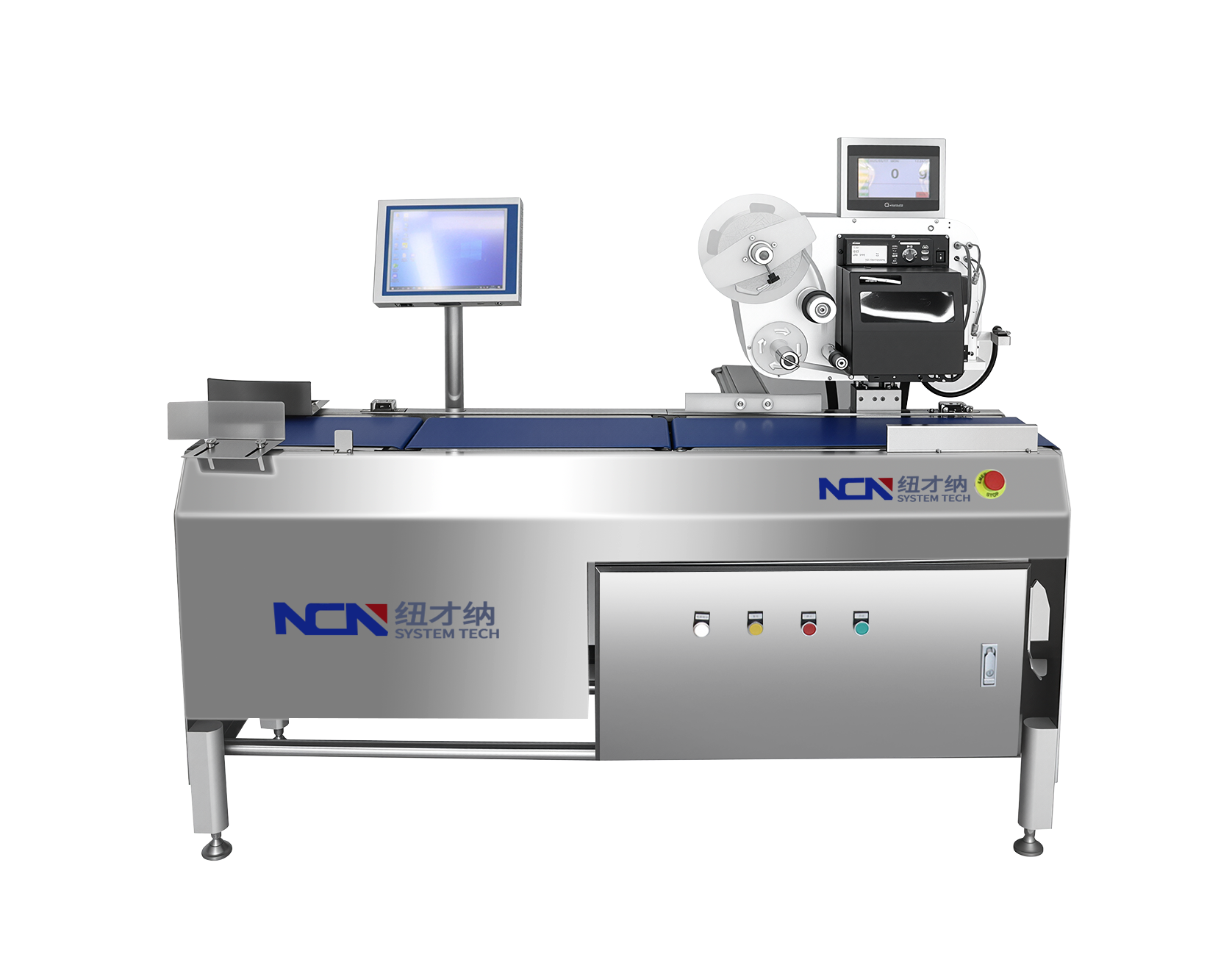
A weigh-price labeller (weighing and labelling machine) combinesdynamic weighing, variable-data processing, label printing and automatic application in one continuous process. For products of varying weight, actual weight can be linked to price, production date, batch, barcode, QR code or traceability data so the correct label is generated for each item.
More Than Weighing and Applying a Label: A One-to-One Match Between Product and Data
Meat, seafood, fresh produce, prepared meals and frozen foods often have variable individual weights. Where weighing, printing and application are separate operations, it is essential to prevent the weight of one product from being assigned to another.
NCN’s weighing and labelling solution is built around that relationship. Once each product has been weighed, the system immediately generates its label data and prints and applies the label within the same production cycle, reducing manual entry and matching.
View NCN Case Studies →Can Weighing, Printing and Labelling Operate Reliably as One Continuous Process?
Equipment suitability cannot be judged from a specification sheet alone. Food producers need to know whether dynamic weighing, label generation, printing and application work together consistently at the required line rate. The actual operating video below shows how these actions are coordinated in continuous production.
Throughput, product dimensions, label size, application position and site conditions vary by project; the final configuration must be validated against actual products and operating conditions.
Which Production Problems Does Weighing and Labelling Solve?
For variable-weight products, the challenge is not weighing or labelling in isolation. It is keeping products, weights, labels and order data correctly matched throughout continuous production.
Reduce Manual Weighing and Data Entry
Weight values are transferred into label generation automatically, reducing repetitive entry and transcription.
Handle Different Variable Data for Every Item
Weight, price, dates, batches, barcodes and QR codes can be printed on demand from the corresponding product data.
Reduce Product-to-Label Mismatches
The weight result is linked to the current product for immediate printing and application, reducing dependence on manual matching.
Build Traceable Production Records
SKU, weight, label, time and inspection data can be linked to support MES/ERP integration and traceability.
How Does a Weigh-Price Labeller Work?
A continuous process connects weight capture, label generation, automatic application and result recording.
Maintain consistent product spacing
actual weight in motion
with price and traceability fields
Generate variable-data labels
or combined labelling
Data storage and traceability
Typical Industries
Weigh-price labelling is particularly suitable where each pack has a different weight and the label content changes with the measured weight.
Meat Processing
Dynamic weighing, pricing, date and traceability labelling for fresh meat, chilled meat and cooked meats.
Seafood Processing
Adapt to varying sizes and weights, automatically matching the actual product weight with label data.
Prepared Meals
Select product records and label templates automatically in multi-SKU operations with frequent changeovers.
Frozen Foods
Weighing, product identification, exception handling and end-of-line data integration in continuous production.
Fresh Produce & Fruit
Generate weight, price and batch labels for trays and packs of varying individual weights.
Central Kitchens
Connect recipes, weights, label templates and production orders for standardised packaging and traceability.
Different Labelling Methods Can Be Configured for the Pack and Application Position
Weighing obtains the correct data; the applicator must then match the packaging format and required label location.
Top Labelling
Common for the top surface of trays and packed foods; a straightforward arrangement for many catchweight pricing applications.
Bottom Labelling
For products requiring labels underneath, optionally combined with top application for two-sided labelling.
Side Labelling
Air-blow, tamp and wipe-on methods can be selected according to the side-wall shape.
Top/Bottom or Multi-Label Combinations
Add a second print-and-apply unit where two labels or different label content is required.
Typical Weigh-Price Labeller Specifications
The following ranges reflect commonly used NCN products and project configurations. Weighing capacity, display interval, dynamic performance and throughput must be interpreted in the context of the actual product and operating conditions. Final parameters depend on dimensions, weights, labels, target capacity and site requirements.
| Target Throughput / Capacity | Up to 100 units/min(under specified product and configuration conditions). Actual output depends on product length, spacing, settling time, label dimensions, print content and application action. |
|---|---|
| Weighing Range | 1.5–30 kg across multiple platforms and machine configurations; the range is selected for product weight, throughput and measurement requirements. This does not mean one machine uses the same weighing structure across the whole range. |
| Display Interval | 0.1 g display interval; display interval, verification interval and dynamic weighing error are different specifications. Actual measurement requirements are confirmed for the weighing range, configuration and technical agreement. |
| Typical Dynamic Weighing Performance | Approximately ±0.5–±5 g; actual results vary with range, product condition, throughput, effective weighing time, conveyor vibration, airflow and site conditions. Final acceptance should be based on representative dynamic sample tests and the technical agreement. |
| Printing Method | Direct Thermal / Thermal Transfer |
| Print Resolution | Common options: 200 dpi / 300 dpi, with the engine selected for the label content and project. |
| Maximum Print Speed | Common existing print systems reach approximately 300 mm/s; final performance of newer platforms depends on engine, resolution, label content and project configuration. |
| Label Dimensions | Common existing formats range approximately from W30 × 30 mm to W110 × 110 mm; the range for newer platforms depends on the print engine, applicator and project requirements. |
| Label Roll | Typical core inside diameter: 76 mm; outer diameter approximately 300–330 mm, depending on configuration. |
| Application Methods | Air-blow, tamp and other pack-specific methods; top, side, bottom and combined labelling options. |
| Machine Material | SUS304 stainless steel is a typical food-industry configuration. |
| Protection Rating | IP65 for typical configurations; final rating is subject to the technical agreement. |
| Product Records | Multiple product recipes and label templates can be stored; existing systems support management of large SKU datasets. |
| Barcode / QR Code | Common formats include Code 39, Code 128, GS1-128, PDF417, Data Matrix and QR Code. |
| Communication Interfaces | USB / RS-232 / LAN, with optional MES, ERP, label management and traceability integration. |
| Operating Environment | Typical conditions: 0–40°C. Cold, high humidity, condensation, strong airflow and other demanding environments require dedicated protection design. |
Before Selecting Equipment, Use the Customer Selection Guide
Use weight range, label width, print engine, application position, throughput, AI recognition, vision verification and data interfaces to shortlist a configuration. The website version of the selection guide is maintained as the current reference for subsequent parameter updates.
How Can MAP Packs Be Weighed, Printed and Labelled After Packaging?
For individually variable-weight trays discharged from modified-atmosphere packaging, the MAP solution describes product spacing, identity checks, dynamic weighing, label generation and application, with optional barcode/AI recognition, vision inspection and MES/ERP integration.
How Should a Labeller Be Selected for Cold, Humid or Air-Blown Environments?
Cold-chain, seafood and meat plants cannot rely on an IP rating alone. Temperature, humidity, condensation, airflow, pack surface, label adhesive, dynamic settling time and cleaning practices all affect long-term performance.
What Does a Complete Weighing and Labelling System Include?
A reliable system is more than a scale and a printer. Conveying, weighing, printing, application, machine control and software must work together.
Core Hardware
- Product Spacing / Infeed Conveyor
- Dynamic Weighing Unit and Load Cell
- Industrial Control System and Touchscreen
- Industrial PC (project-dependent)
- Industrial Print Engine, such as SATO S84-ex where specified
- Label Unwinding and Application Mechanism
- Product Sensors, Encoders and Position Detection
- Optional Reject and Collection Mechanism
Software & Data
- SKU / Product Recipe Management
- Label Templates and Variable Fields
- Automatic Weight-to-Label Data Transfer
- Production Orders and Task Selection
- Barcode / QR-Code Generation
- Production Statistics and Result Logging
- User Access and Parameter Management
- Project-Specific MES / ERP / API Interfaces
The Value Goes Beyond Applying a Label
Weight, SKU, orders, label templates, barcodes and inspection results can connect to production systems, making the label part of the production data flow.
After Labelling, Verify That the Correct Label Was Applied
For production lines with stricter labelling requirements, vision inspection can be added after weighing and labelling to verify label presence, count, position and content.
- Missing Label / Label Presence Checks
- Label Count & Application Checks
- OCR and Critical Text Field Checks
- Barcode / QR-Code Reading and Verification
- Link Inspection Results to SKU, Weight and Label Records
- Optional Rejection of Nonconforming Products
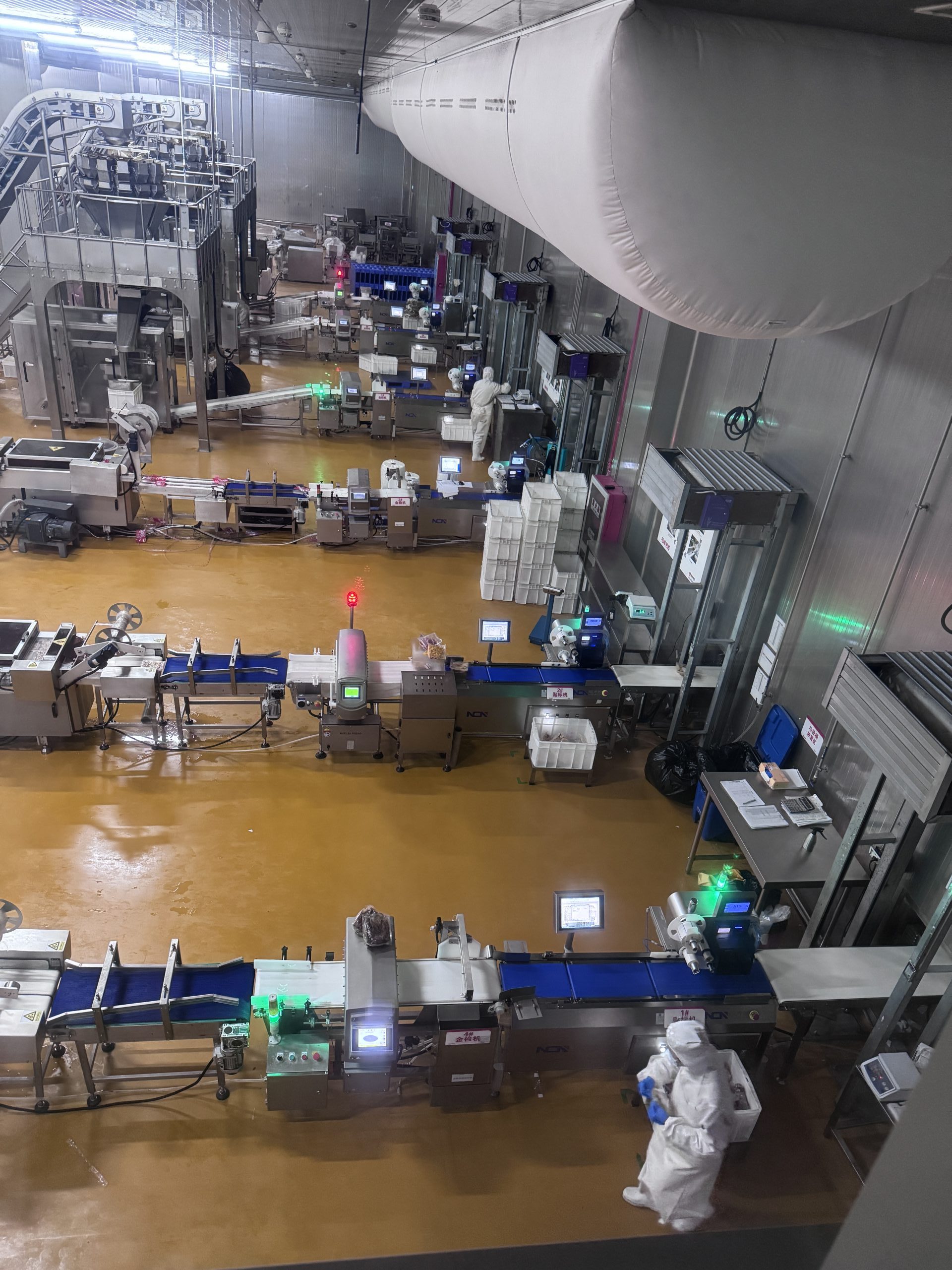
Real Projects Are More Informative Than Equipment Figures Alone
Product sizes, weight variation, packaging materials and line speeds differ across food production. Final weighing and labelling solutions must be validated using real products and actual site conditions.
Seafood Weighing & Labelling Automation
Combine conveying, dynamic weighing, label generation and downstream automation for varying seafood product formats.
View Case Study →
AI Recognition with Weighing, Labelling and Inspection
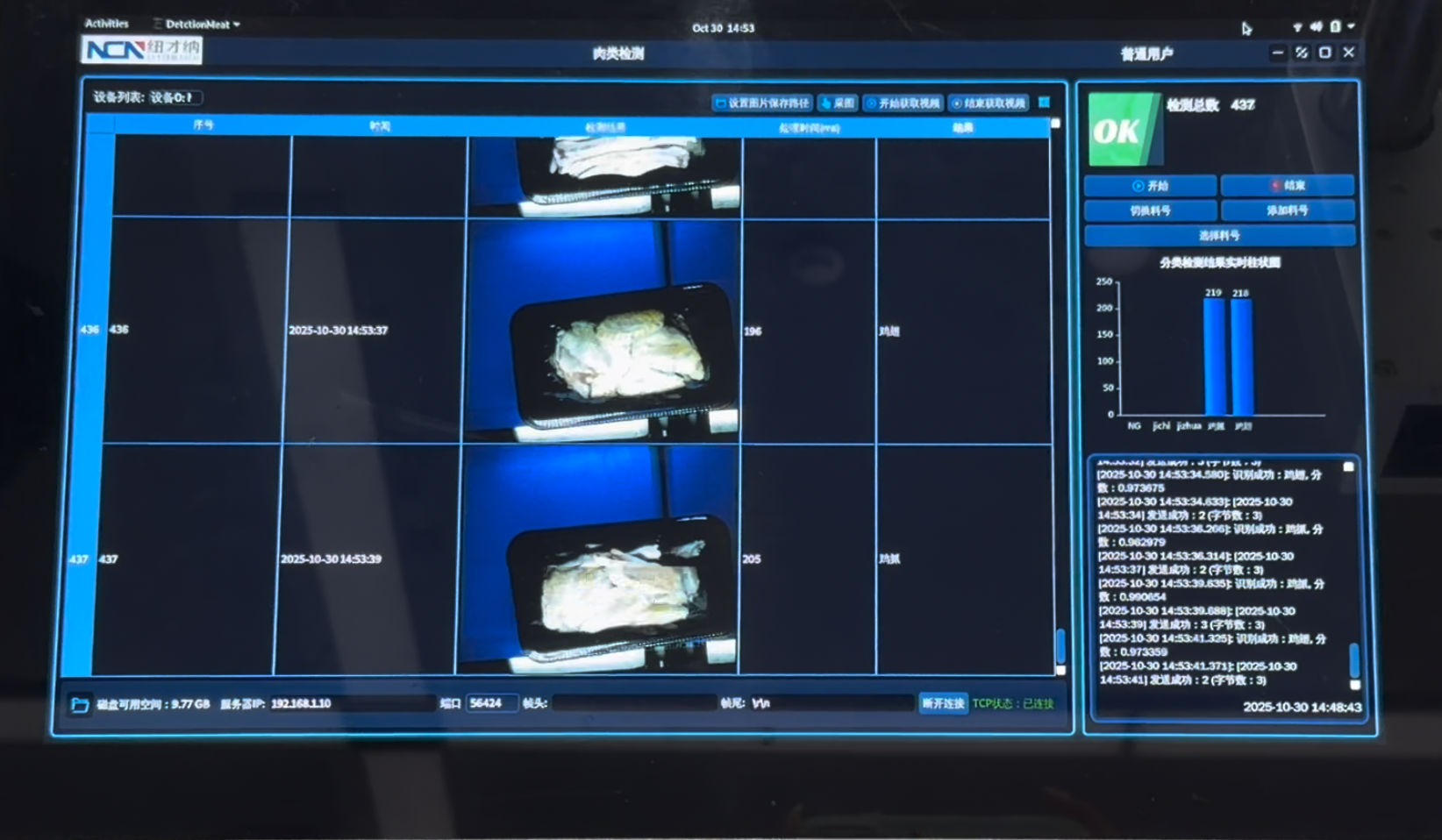
Link product identification, weight data, label generation and vision verification to reduce dependence on manual checks for incorrect or missing labels.
View Case Study →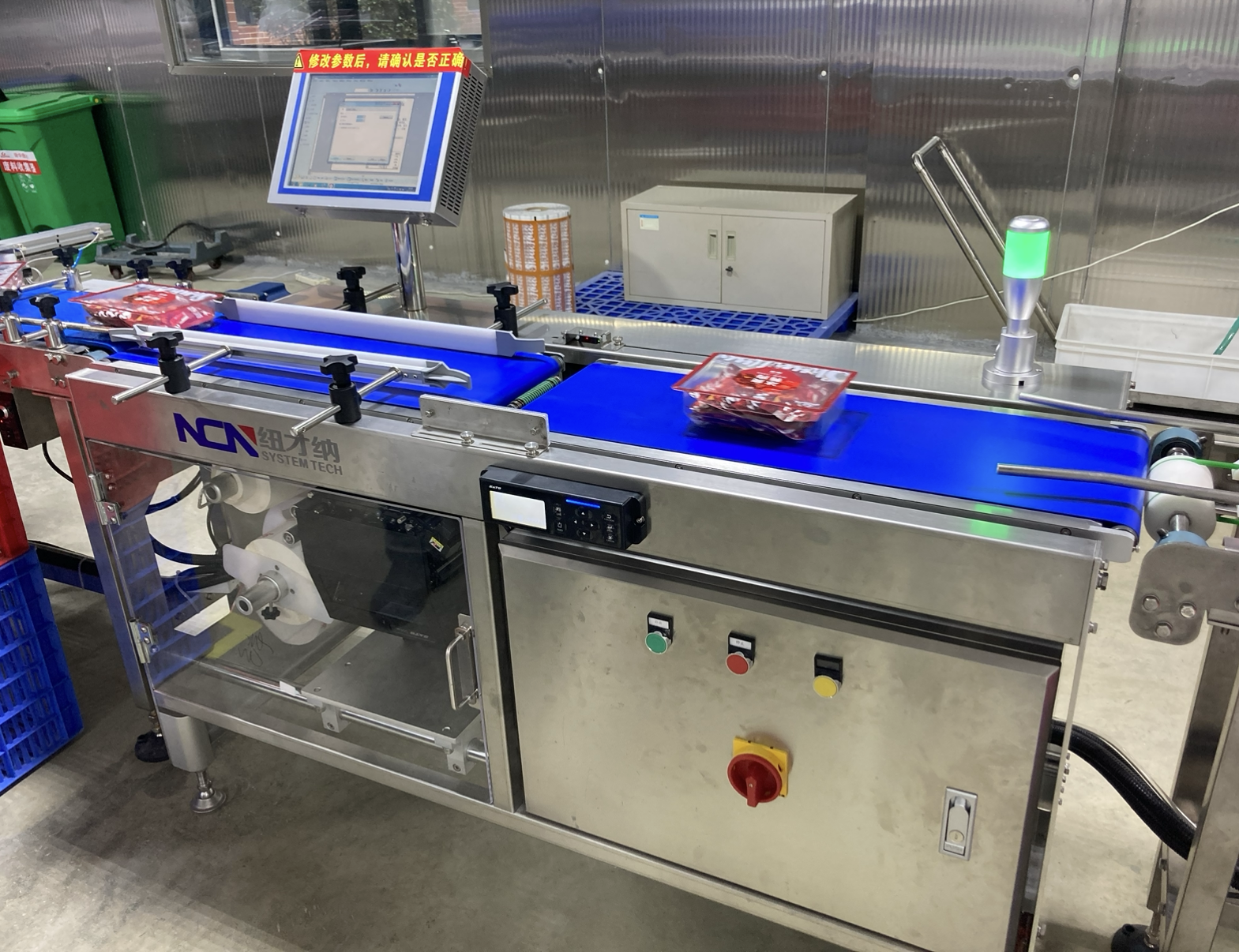
Two-Sided Labelling for Packed Foods
Print and apply labels to the top and bottom surfaces in continuous production, integrated with conveying, inspection and downstream operations.
View Case Study →What Should Be Confirmed Before Choosing a Weigh-Price Labeller?
Simply requesting a weighing and labelling machine is not enough for accurate equipment selection. The details below directly affect machine structure, speed, weighing performance and quotation.
Product
Product name, packaging type, minimum/maximum length, width and height, individual weight range and product condition.
Production Throughput
Current and target speeds, minimum spacing and upstream/downstream operating arrangements.
Labels
Dimensions, material, application position, print content, barcode type and whether multiple labels are required.
Data & Environment
MES/ERP interfaces, traceability, temperature, humidity, cleaning, water protection, airflow and other site conditions.
What Technical Support Is Available After Delivery?
For continuous-production equipment, after-sales support is more than the warranty term. Clear response, remote diagnostics and on-site support procedures are critical when a fault occurs. NCN offers a coordinated warranty, technical hotline, remote support, training and service framework.
Warranty Coverage
A one-year warranty applies to the main machine, excluding consumables and wear parts. Parts and repairs for faults arising from original design, manufacturing or assembly defects are covered within the warranty period. The warranty start date and project boundaries are defined in the contract and technical agreement.
Phone & Remote Support
Technical hotline and remote assistance are available on working days for troubleshooting, parameter adjustments and software guidance. General issues are first assessed via phone, video or remote connection.
On-Site Service
Technical response within 2 hours and remote intervention within 4 hours of receiving a fault report. For confirmed equipment faults that cannot be resolved remotely and require an on-site visit, the target is arrival within 12 hours after confirming the service requirement.
Training & Ongoing Support
Operator training, routine inspection, basic maintenance and common fault handling can be provided. Remote support, repairs, spare parts and on-site technical service remain available after the warranty period.
Weigh-Price Labeller FAQs
These are common questions for food manufacturers during equipment selection and project discussions.
What Does a Weigh-Price Labeller Do?
How Does It Differ from a Standard Print & Apply Labeller?
How Should Target Throughput Be Evaluated?
Why Are Display Interval and Dynamic Weighing Error Not the Same Accuracy Figure?
Can the System Connect to MES or ERP?
Can Vision Inspection Be Added to Detect Incorrect or Missing Labels?
What After-Sales Service Does NCN Provide?
Why Do Weigh-Price Labeller Prices Vary?
Related Products & Technical Information
Internal links to products, case studies and technical articles help customers understand NCN’s complete end-of-line food packaging capabilities.
Need to Confirm a Weighing and Labelling Solution?
Send product photos, dimensions and weights, target throughput, label samples and site requirements so NCN can propose an appropriate configuration.
提交您的项目需求
告诉我们应用场景与节拍要求,我们会在 1 个工作日内提供选型建议与方案参考。
 微信扫码咨询