
Choosing a Weigh-price Labeller for Cold, Humid Food Production Environments
In chilled-food, seafood and meat processing environments, reliable weigh-price labelling depends on more than whether a machine can operate. The question is whether weighing, printing and labelling remain stable over time when low temperatures, high humidity, condensation, cold airflow, moisture on packaging and cleaning requirements occur together.
Look Beyond the IP Rating
Ingress protection matters, but reliable operation in a cold-chain project also depends on the environment, products, weighing, printing, label materials and cleaning methods. Listing IP65 in a specification cannot replace validation under actual operating conditions.
Low Temperatures and Condensation
When equipment moves from ambient conditions into a cold area, or temperature and humidity fluctuate, condensation can affect electrical components, sensors, print mechanisms and metal surfaces.
Cold Air and Airflow
Dynamic weighing is sensitive to settling time and external disturbances. Cooling fans, air curtains and strong airflow can affect weight readings directly. Layout, wind shielding and control settings need to be considered together.
Moisture on Packaging
Moisture, grease or low temperatures on trays, plastic bags, cartons or foam boxes can directly affect a label adhesive’s initial tack and long-term adhesion.
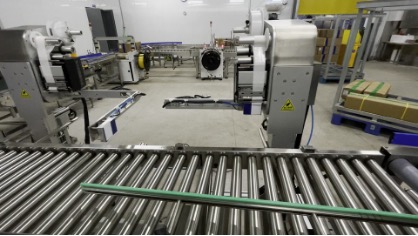
Confirm Six Site Conditions
What to Check for Weighing, Printing and Labelling in Cold-chain Environments
A single machine contains several functional modules, each exposed to different environmental risks.
| Module | Main Low-temperature / High-humidity Risks | Points to Confirm |
|---|---|---|
| Dynamic Weighing | Airflow, vibration, unstable conveying and product movement can reduce the effective weighing window. | Product weight range, carton/tray dimensions, speed, spacing, wind shielding and dynamic test results. |
| Industrial Printing | Low temperatures, high humidity and condensation may affect the print mechanism, consumable condition and print clarity. | Printing method, label material, ribbon or thermal media, print content, barcode grade and routine maintenance. |
| Automatic Labelling | Cold, wet or greasy packaging surfaces may cause poor initial tack, lifted edges or detached labels. | Adhesive type, application position, surface material, pressure application method and tests with actual packaging samples. |
| Electrical Components and Sensors | Condensation, moisture and frequent temperature changes increase risks for connectors, sensors and electrical controls. | Protective structures, control cabinets, seals, cable routing, component selection and maintenance. |
| Machine Cleaning | Food production environments often require both easy cleaning and corrosion resistance. | SUS304 construction, hard-to-clean areas, ease of disassembly and the customer’s actual cleaning process. |
Project Example: Heavy Seafood Boxes with Dual-side Weigh-price Labelling
At a seafood processing project in southern China, NCN combined dynamic weighing, on-demand label generation and left/right labelling in a continuous conveying process, addressing low temperatures, high humidity, multiple box sizes, heavy boxes and cold-air interference.
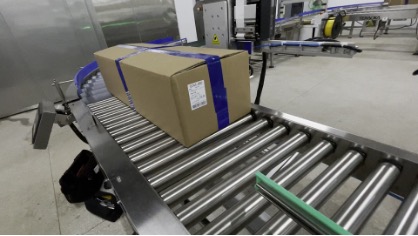
Project Conditions Explain More Than a Single Specification
The project documentation records 38 box sizes, including cartons and foam boxes. The design weighing range was 20–60 kg, with a target capacity of at least 30 boxes/min. Engineering provisions addressed 0–10°C, 75–95% relative humidity and cold-air interference.
The value of this case is the approach to validation: products, environment, weighing, labels, speed and cleaning conditions must be assessed together. The same parameters should not simply be transferred to another customer’s project.
Information to Prepare Before Starting a Project
Products and Packaging
Maximum and minimum dimensions, weight ranges, packaging materials, surface condition and any standing water, frost or grease.
Temperature, Humidity and Cleaning
Operating temperature and humidity, fan positions, cleaning methods and frequency, and whether equipment must be moved out of the cold area.
Labels and Consumables
Label dimensions, adhesive type, print content, barcodes/QR codes, application position and the performance of existing labels in cold conditions.
Throughput and Spacing
Target boxes or trays per minute, incoming gaps, upstream packaging-machine discharge conditions and downstream connections.
Weighing Requirements
Weighing range, allowable dynamic error, grading requirements, out-of-tolerance handling, and acceptance samples and test conditions.
Data Interfaces
Whether MES/ERP/WMS connectivity is required, how production tasks are issued, and whether weight and label results must be returned.
Related Resources
Frequently Asked Questions
Is an IP65 Rating Enough for a Cold-chain Production Area?
No. Ingress protection is only one factor. Temperature, humidity, condensation, cold airflow, cleaning, packaging surfaces, label materials and dynamic weighing conditions also need to be confirmed. The technical agreement approved by both parties governs the project.
Can Low Temperatures Affect Label Adhesion?
Yes. Label adhesives have requirements for application temperature, service temperature and substrate condition. Test the actual packaging and labels under the relevant cold, wet, greasy or condensation-prone conditions.
Why Can Cold Air Affect Weighing?
Dynamic weighing must obtain a stable weight within a limited time. Strong airflow can disturb the scale, product or weighing signal. Wind shielding, conveying stability and control settings therefore need to be assessed together.
Can a Cold-chain Project Connect to MES or ERP?
This can be assessed for the specific project. Environmental suitability and data integration are separate considerations. Integration depends on system access, data fields, business rules, networks and cooperation from third parties.
Planning a Cold, Humid or Cold-chain Production Project?
Send product details, weight ranges, target throughput, sample labels, room temperature and humidity, and cleaning methods so we can identify the conditions affecting weighing and labelling stability.
 微信扫码咨询