
CUSTOMER CASE · CHILLED-MEAT PACKAGING AUTOMATION
Chilled Meat: AI Recognition, Weigh-Price Labelling and Label Inspection
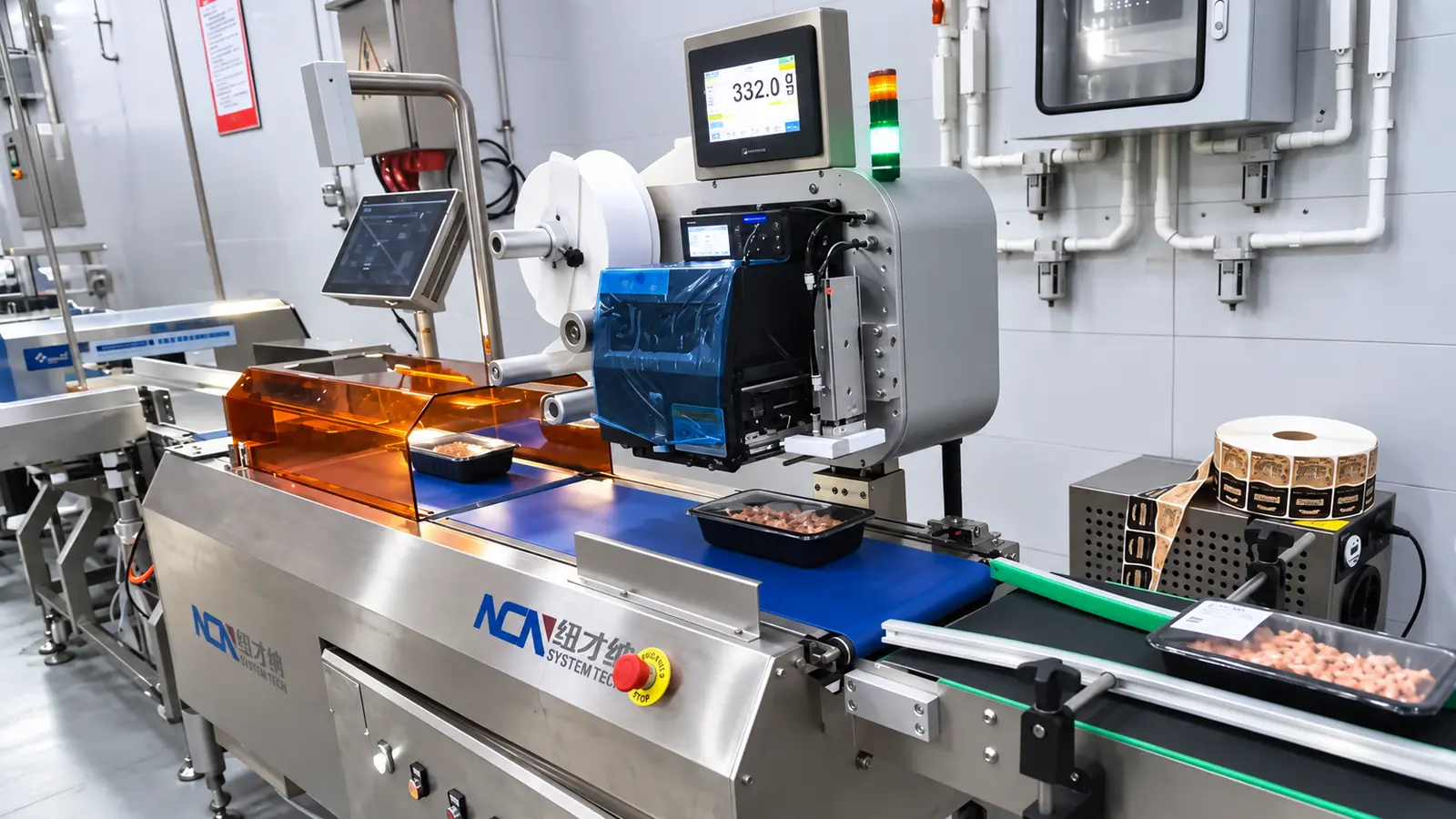
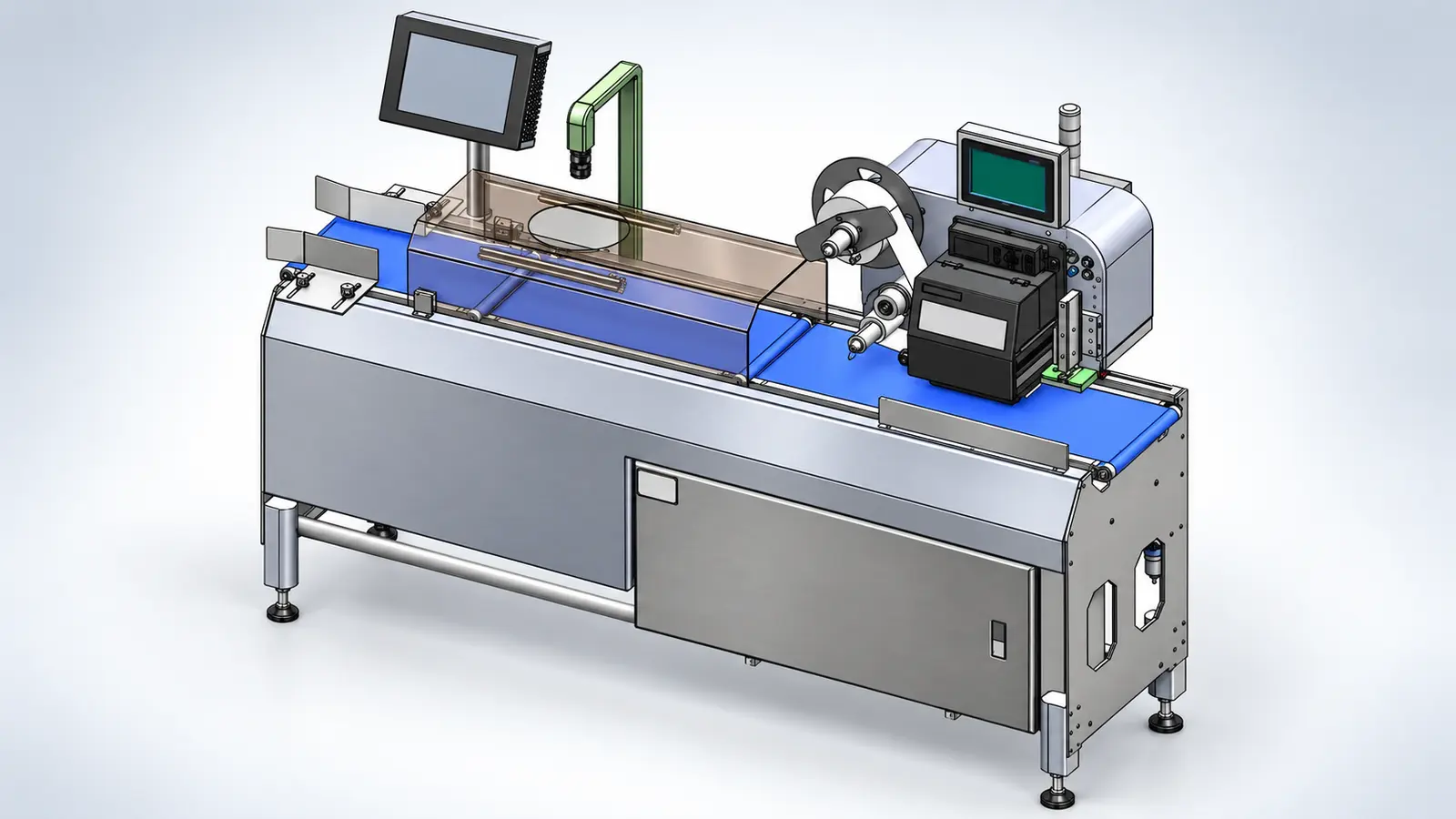
For multi-SKU chilled-meat trays at a large meat processor, NCN integrated product recognition, recipe selection, dynamic weighing, variable-label printing and application, and post-labelling vision inspection into a continuous workflow. The equipment is in use at the customer’s site.
Project challenge
Identify the product and verify its label on the same line
Chilled-meat packs vary in appearance, cut, tray colour and weight, with frequent SKU changes. Manual recipe selection, label checking and inspection are affected by production pace, fatigue and reflections.
Match each product to the right recipe
Before weighing, the product category must be identified and the correct SKU, label template and production parameters selected to reduce manual recipe-selection errors.
Weight and variable information change in real time
Net weight, date, batch, price and traceability information must be generated according to production rules and remain consistent with the current product and label template.
Verify the applied label
The system checks label presence, type, quantity, position, key information and the readability of barcodes or QR codes.
Two vision tasks
Two distinct vision tasks before and after labelling
The two vision stages work in sequence but have different inspection objectives. Designing them separately closes the loop from selecting the correct recipe to verifying the applied label.
BEFORE LABELLING · AI PRODUCT RECOGNITION
Which product is this, and which recipe should be selected?
Identify the SKU from visual features and coordinate weighing, printing and labelling parameters to reduce errors from manual template selection and recipe changes.
AFTER LABELLING · LABEL VISION INSPECTION
Which label was applied, and are its content and position correct?
Capture another image of the labelled pack to check label presence, quantity, type, key text, code readability, position and integrity, then output an OK/NG result.
System workflow
The complete workflow from infeed to OK/NG handling
- Product infeed Trays enter the recognition station at the site’s production rate.
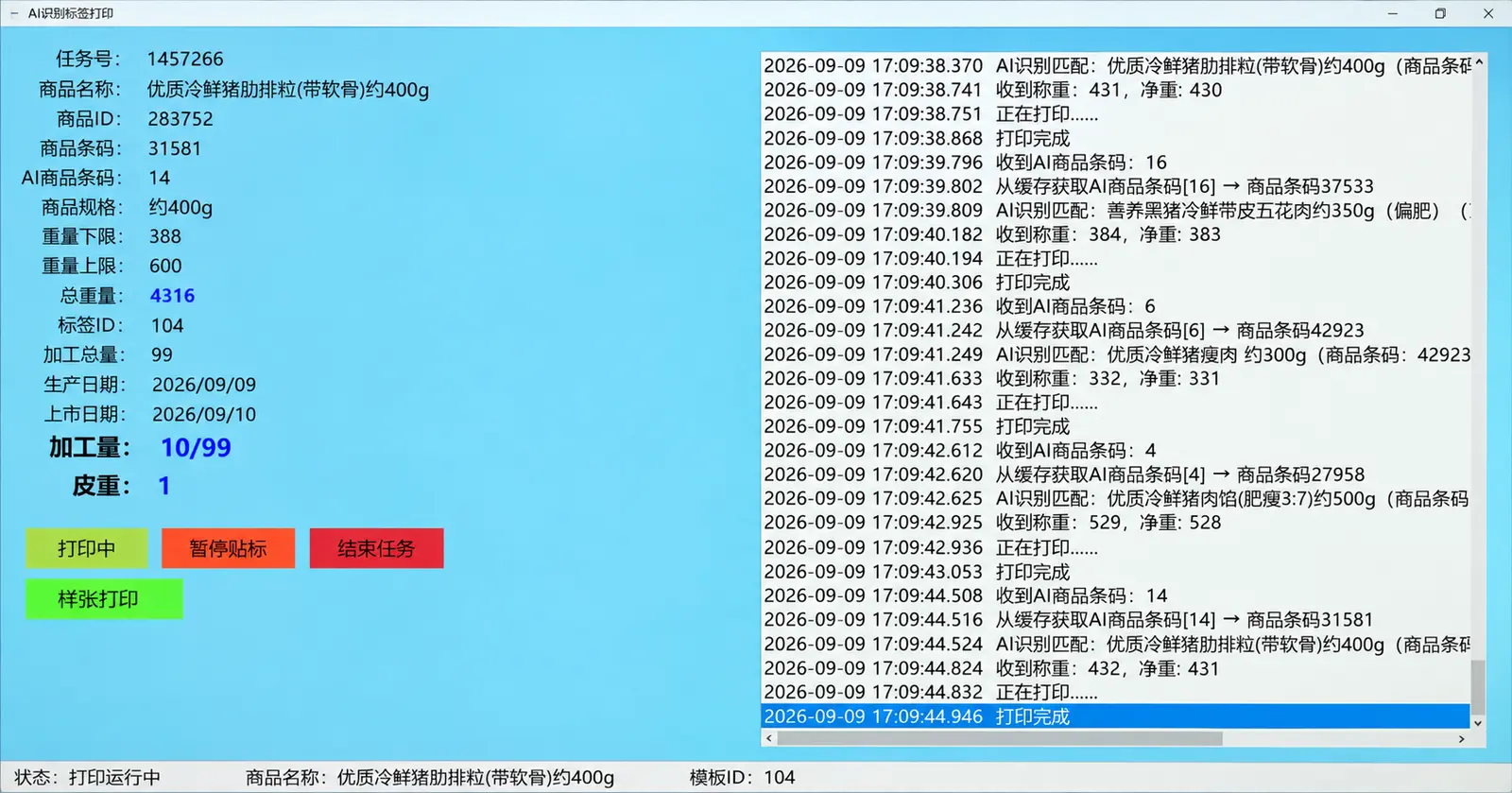
- AI recognition Identify the product category and SKU and output the recipe selection.
- Recipe selection Coordinate weighing settings, label templates and inspection rules.
- Dynamic weighing Acquire the current pack’s weight on the line.
- Print and apply Generate and apply white variable-information labels in real time.
- Vision inspection Check label content, quantity, position and readability.
- Result handling OK products pass; NG results trigger an alarm, rejection or recording.
Implementation focus
Four implementation priorities for fresh-food packaging
Film reflections and stable imaging
Clear film, label laminates and ambient lighting can cause glare. Camera selection, lighting, installation angles and exposure settings are coordinated to improve image consistency in the label area.
Appearance variation within a product category
Fresh meat varies naturally. Models and decision rules must cover different cuts, placement, fat patterns, tray colours and packaging conditions.
Different labels serve different purposes
This project automatically prints and applies white variable-information labels. Pre-printed colour brand labels can be included in visual inspection. Automatic colour-label application requires a separate applicator.
SKU changeovers and rule maintenance
Recipes link products, label templates, weighing parameters and inspection rules, simplifying changeovers, the addition of SKUs and updates to inspection requirements.
On-site application
Equipment in use at the customer’s site
Integrated functions deployed as a working packaging process
The system is deployed at the customer’s packaging site for chilled-meat tray recognition, weighing, variable-label printing and application, post-labelling inspection and exception handling. This case study describes implemented functions and application status without disclosing the customer’s name, address, label traceability information or commercial terms.
Product examples
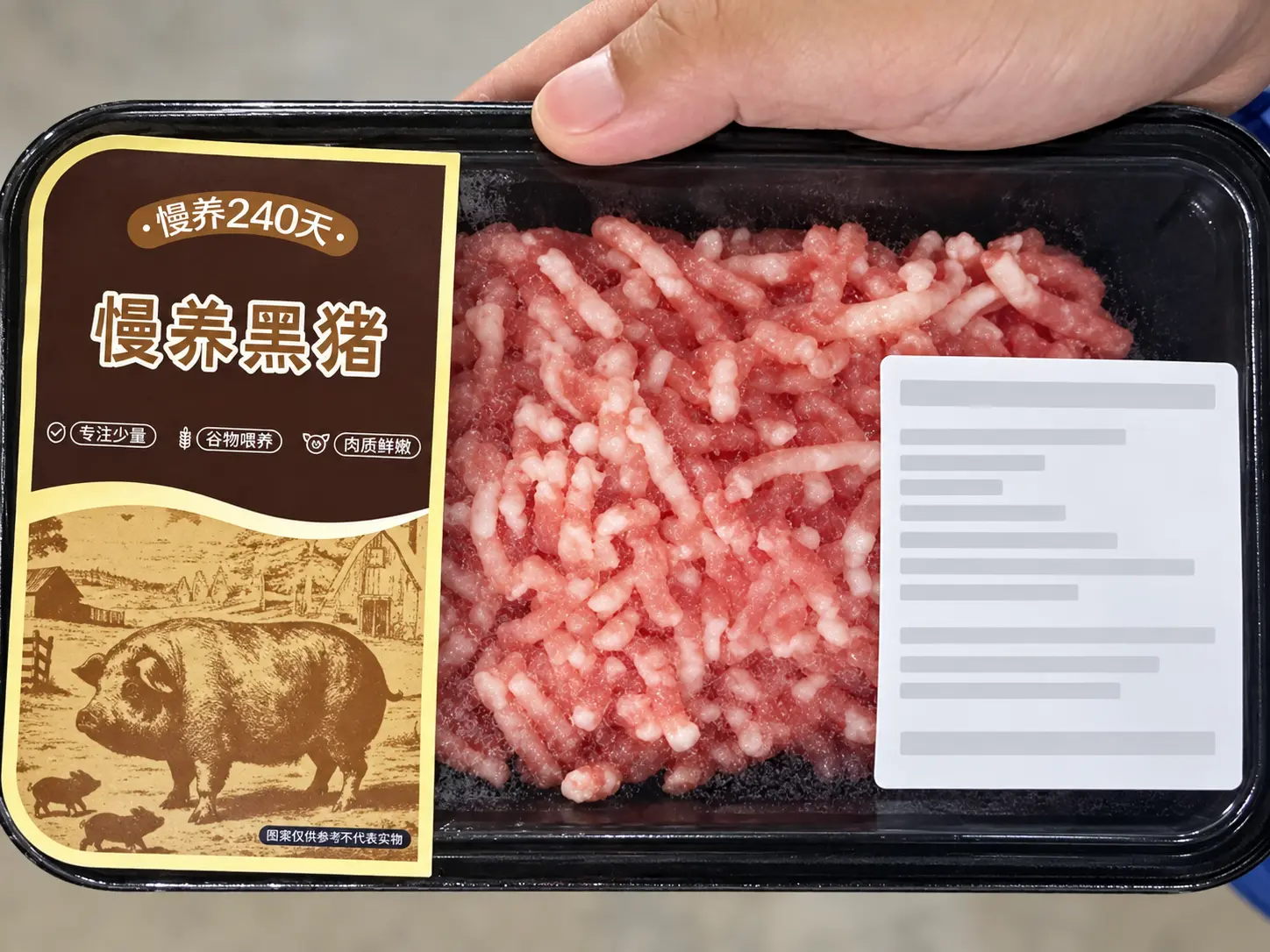
On-site product examples
To protect customer information, company names, addresses, QR codes, barcodes and traceability numbers on white information labels have been masked. Pack formats and label layouts are retained to illustrate the actual inspection subjects.
Project value
Key benefits of the solution
Linking product recognition to recipes reduces the risk of manually selecting the wrong recipe or label template during multi-SKU production.
Confirm the product and recipe before labelling, then inspect the applied label to verify the result.
Recipes link products, label templates, weighing parameters and inspection rules for changeovers and future SKU additions.
Recognition, weighing, printing and inspection results can be retained to suit project requirements and connected to MES, ERP and other production systems.
Application scope
Applications and project confirmation requirements
| Suitable products | Chilled meat, poultry, seafood, cooked foods and other tray-packed, film-wrapped or prepacked foods. |
|---|---|
| Typical requirements | Multi-SKU recognition, dynamic weighing, variable-data printing, inline labelling, label-content verification, code reading and NG handling. |
| Initial samples | Samples of every SKU, different packaging conditions, complete label layouts, defect samples and production-rate information. |
| Site conditions | Conveyor direction and height, product spacing, lighting, available space, upstream/downstream signals, rejection method and data interfaces. |
| Acceptance criteria | Testing follows the agreed SKU scope, label layouts, defect definitions, production-rate conditions and test methods. |
FAQ
Frequently asked questions
How does pre-labelling AI recognition differ from post-labelling vision inspection?
Does the system automatically apply colour brand labels?
What happens when a label defect is detected?
Can the system connect to MES or ERP?
Case evidence
Based on a deployed project, with customer information protected
This page is based on the project proposal, on-site operating status and images approved for public use. Customer company names, addresses, label traceability information and commercial terms are not disclosed. Statements about production rate, recognition and inspection performance retain their project-specific conditions.
Planning food weighing, labelling and vision inspection?
Share product samples, label layouts, target production rates and the site layout. NCN can help assess recognition, weighing, labelling, inspection and data integration.
Founded in 2015, NCN Automation Technology (Shanghai) Co., Ltd. focuses on intelligent food packaging automation. With weigh-price labelling at its core, NCN also provides inline print-and-apply, AI recognition and vision inspection, quality inspection, robotic labelling and production data integration, combining equipment, software and system integration for food manufacturers.
 微信扫码咨询