
CIMIE 2026 Qingdao Review: NCN and SATO Demonstrate Weigh-price Labelling and Food Packaging End-of-line Solutions
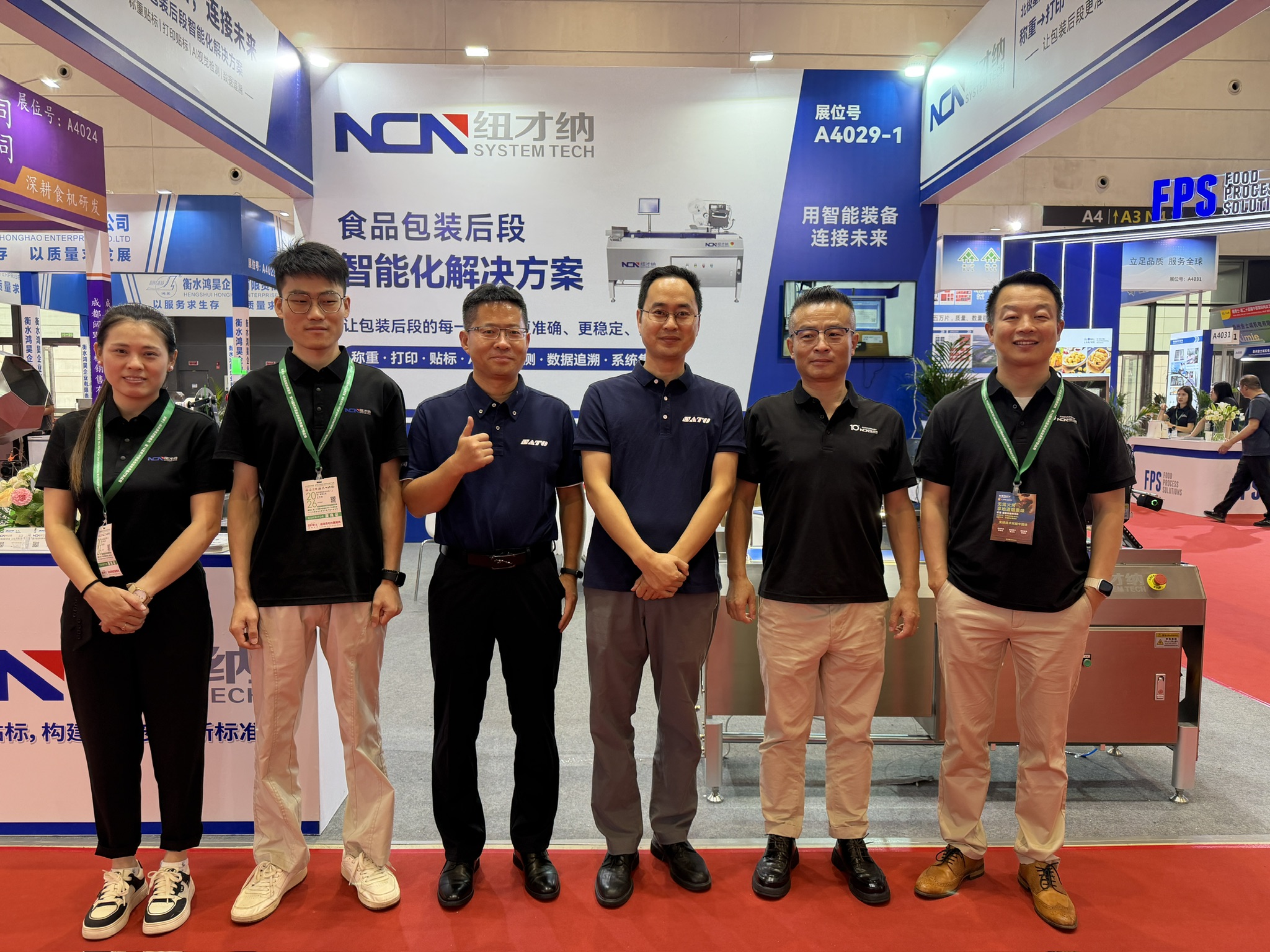
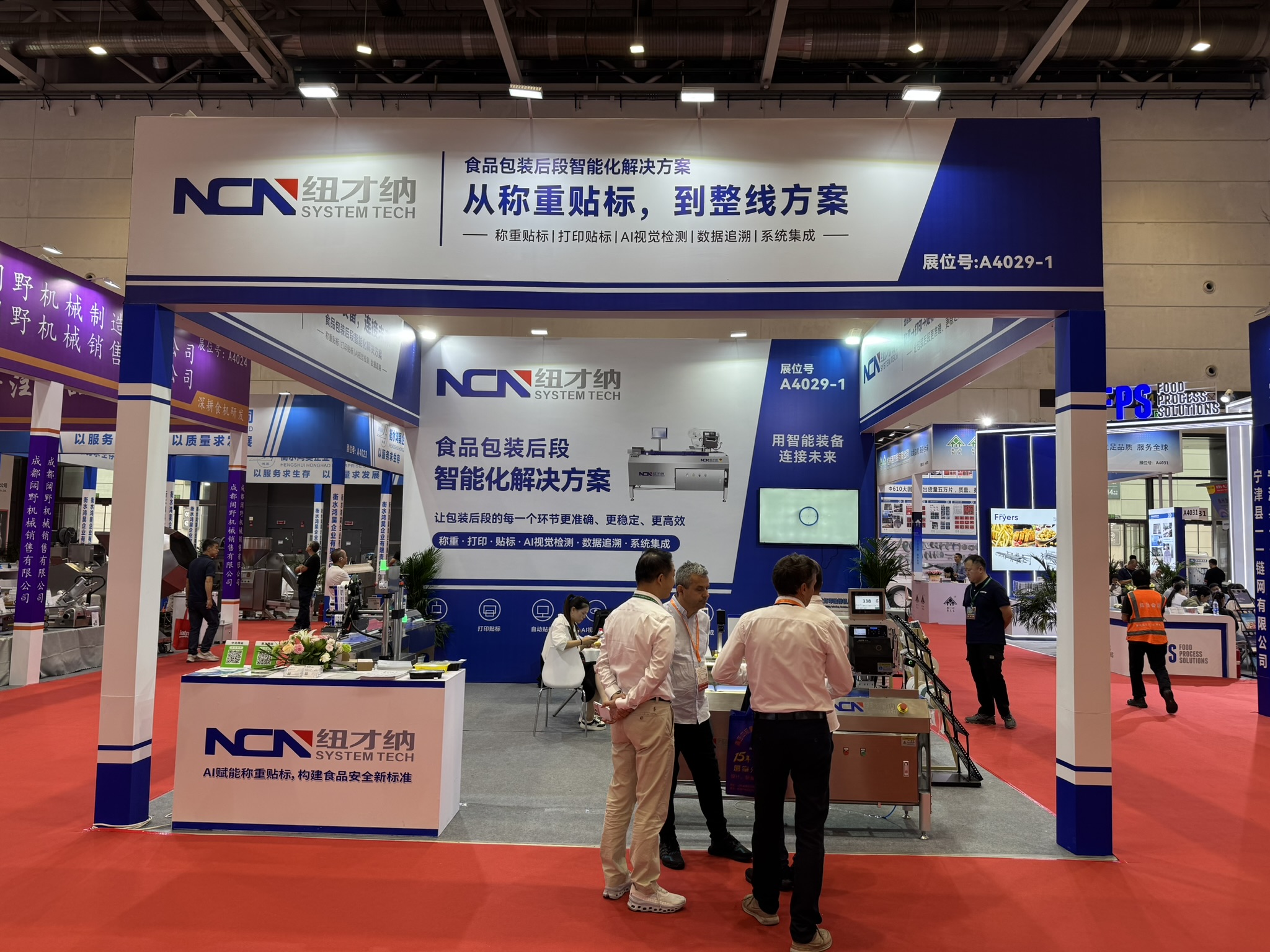
The 24th China International Meat Industry Exhibition (CIMIE 2026) concluded in Qingdao on 14 September 2026. NCN Automation Technology (Shanghai) Co., Ltd. exhibited jointly with SATO, demonstrating weigh-price labelling, AI recognition, vision verification and food packaging end-of-line automation.
After a tray of chilled meat is packaged, it typically needs to be weighed, have a label printed and applied, and then proceed to case packing and dispatch. Does the recorded weight belong to this pack? Are the product name and batch correct? Can production continue smoothly after a change of specification? These are everyday practical questions for food factories.
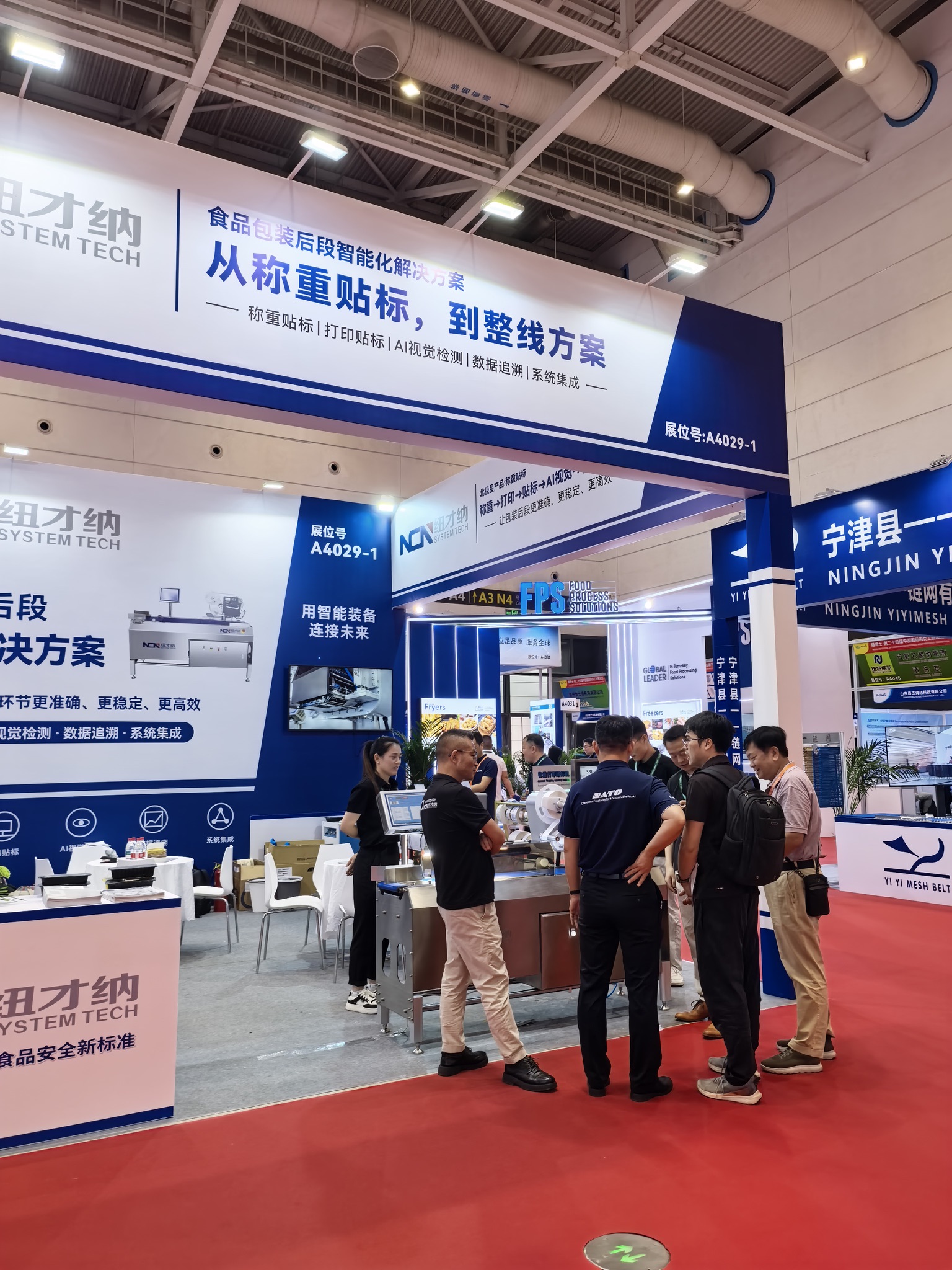
At the Qingdao exhibition, NCN demonstrated these steps on working equipment. Visitors could relate the demonstrations to their own products, labels and production lines and see how dynamic weighing, variable-data label printing, automatic labelling and subsequent inspection connect.
Every Pack Must Stay Matched to Its Weight and Label
A weigh-price labeller, also known as a weighing, printing and labelling machine, combines individual product weighing, label printing and automatic application in one workflow. For products priced by weight or requiring recorded weight data, the system can generate a corresponding label from the weighing result and production task, while retrieving product names, batches, dates, barcodes and other information according to product data and business rules.
In production, the equipment must also handle a continuous flow of products. Changes in product position, insufficient gaps between consecutive packs or switching to packages of a different height can affect weighing stability and label placement. Product dimensions, weight range, target throughput, label size and application position therefore need to be confirmed together during equipment selection.
SATO Printing Technology Integrated with NCN Weigh-price Labelling
The joint exhibition combined SATO’s industrial printing technology with NCN’s dynamic weighing, software control and automatic labelling applications. Data reception, printing and label application must remain synchronized with the conveyor. Demonstrating these stages together helped visitors understand how a print engine integrates into a complete weigh-price labelling system.
SATO’s official website announced the joint exhibition on 11 September, describing applications in product recognition, weighing, label template matching and data collection. Read SATO’s Official Exhibition Announcement (Chinese) →
NCN had also published a preview of the joint CIMIE 2026 exhibition, with booth information and the main demonstration topics. Read the Exhibition Preview (Chinese) →
AI Recognition and Vision Verification Address Different Stages
For factories processing several products on the same line, correctly switching label templates is a practical issue that can be overlooked. NCN’s AI recognition and labelling solution can first identify the product category using vision, then retrieve the corresponding product data and label template and combine these with the weighing result for printing and application.
Product recognition and post-labelling vision verification perform different tasks. The former helps identify the product category and select the template; the latter checks for missing labels, placement deviations and whether text or barcode content meets the specified requirements. Production information such as batch numbers and dates still needs to come from production tasks or system rules.
For similar-looking products, reflective packaging or substantial variation in product orientation, recognition performance must be validated with actual samples. The proposal should also define how the equipment alarms, pauses or requests manual confirmation when recognition is uncertain.
From Weigh-price Labelling to a Connected Food Packaging End-of-line
The booth’s theme, From Weigh-price Labelling to Complete Line Solutions, addressed connections between the different stations in food packaging end-of-line operations. The upstream packaging machine’s discharge rate, product entry into the weighing section, the point at which rejected products are separated and how accepted products reach the next process all need to be considered within one layout and control plan.
With weigh-price labelling at the core, NCN can address these requirements by combining checkweighing, metal detection, label vision verification and conveying according to the project, and assessing data connectivity with MES, ERP and other systems. The data fields to exchange and the way batches or orders are linked should be agreed with the customer based on existing production and management workflows.
For existing lines, specific bottlenecks such as manual weighing and labelling, label checking or defect detection can be addressed first, with inspection and data functions added as required. For new lines, equipment layouts, upstream/downstream throughput and maintenance access should be confirmed early.
After the Exhibition: Focus on Specific Products and Production Lines
Thank you to the customers and industry colleagues who visited the NCN booth, and to the SATO team for taking part. Companies evaluating weigh-price labelling, label automation or packaging end-of-line upgrades can prepare their main product specifications, weight ranges, sample labels and a short video of normal production. A clear picture of site conditions supports more detailed discussions of equipment configurations, interfaces and implementation scope.
Evaluating Weigh-price Labelling or a Food Packaging End-of-line Upgrade?
Provide product photos, dimension and weight ranges, sample labels, target throughput and a site video to discuss equipment configurations and production-line integration.
Submit Your Project Requirements 微信扫码咨询