
NCN AUTOMATION · PROJECT CASE
Chilled Meat: AI Recognition, Weigh-Price Labelling & Label Inspection
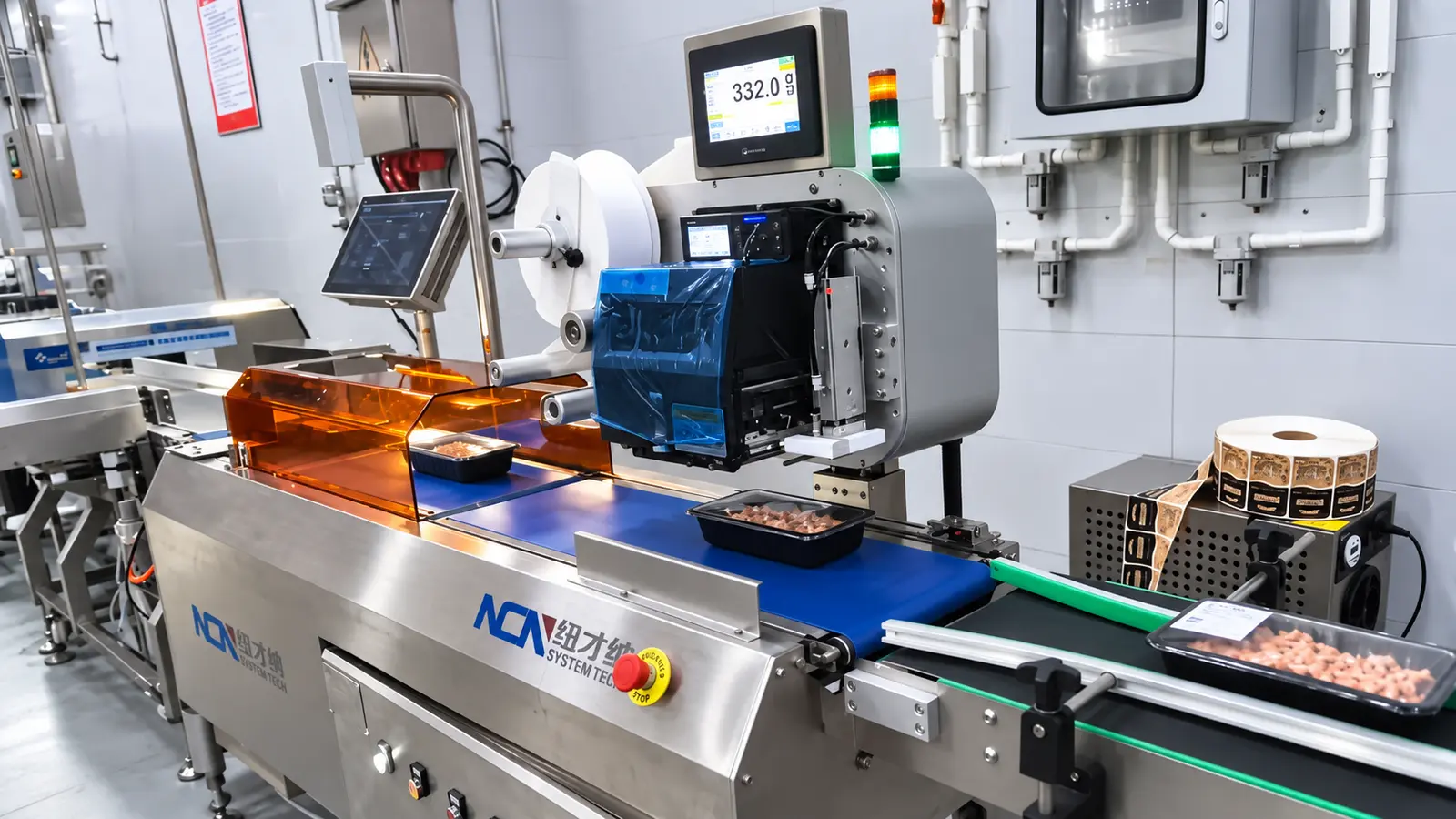
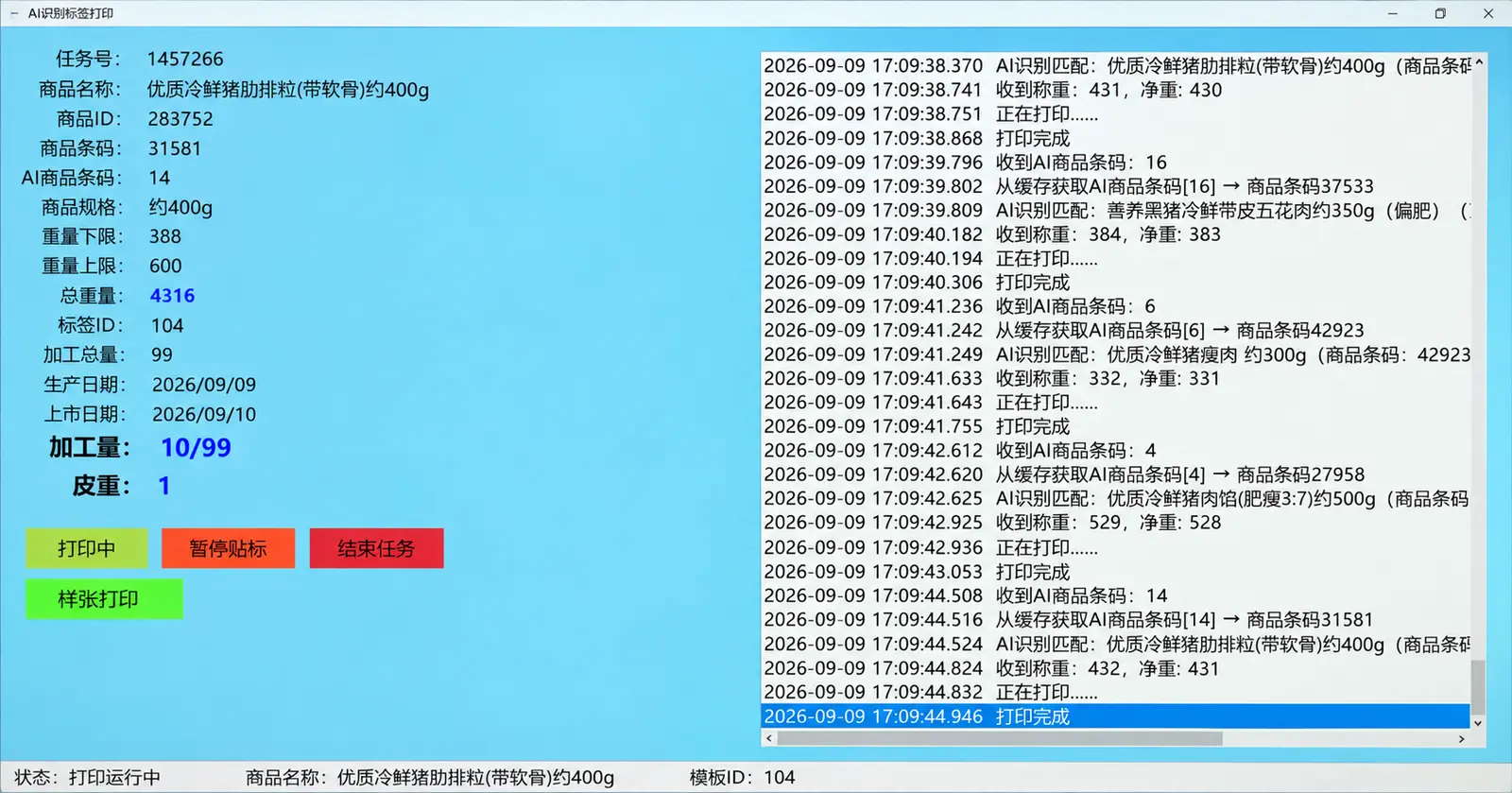
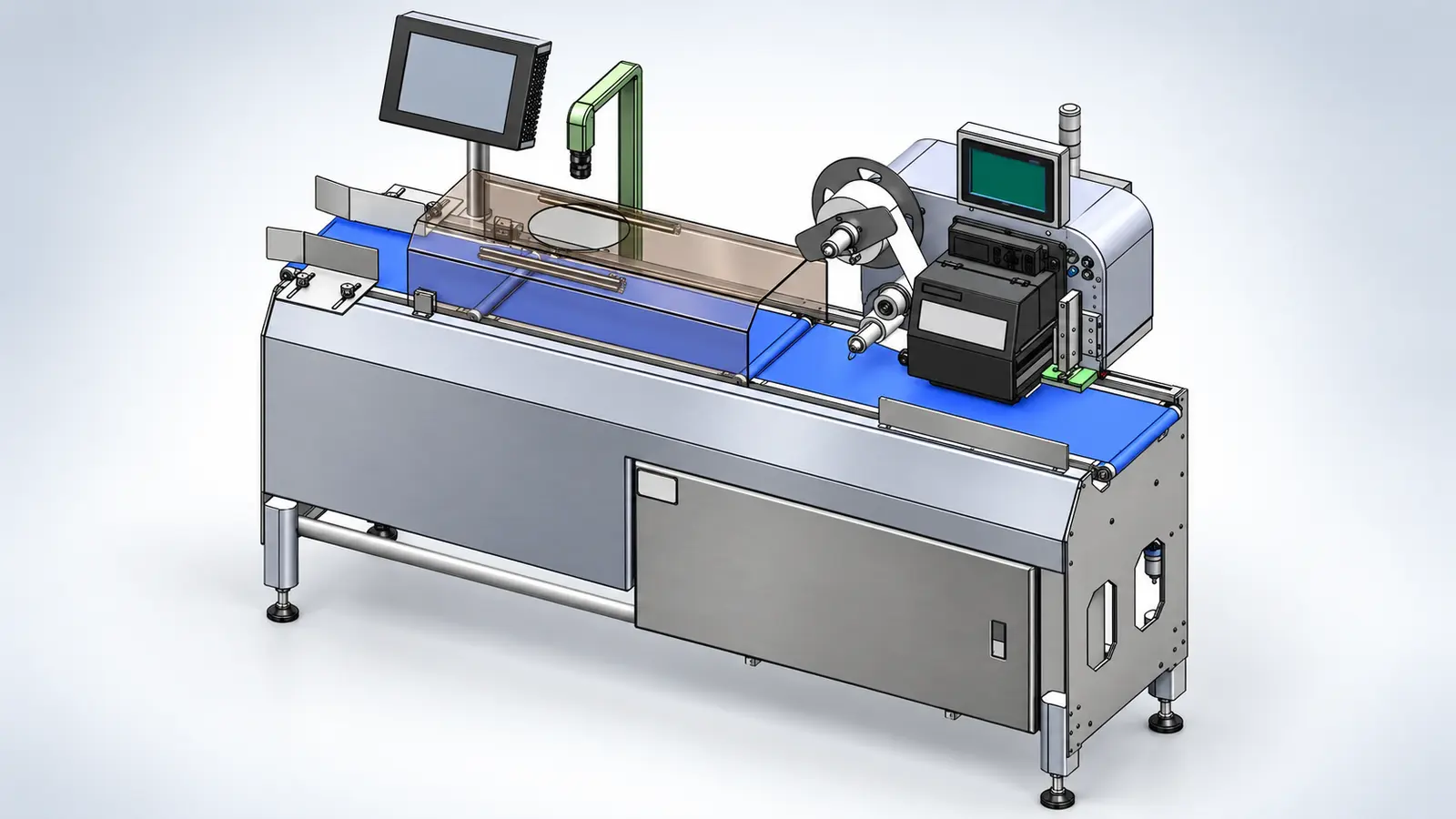
At a large meat processor, NCN equipment is in on-site use for multiple chilled-meat tray SKUs. The integrated workflow identifies the product, retrieves the associated recipe/template, performs dynamic weighing, prints and applies variable information labels, then checks the result by vision.
Key Facts & Application Details
Before labelling
AI product recognition determines the SKU and associated recipe, label rules and weighing parameters.
Variable information
Actual weight, date, batch, price or traceability fields are generated according to production rules.
After labelling
Vision can inspect label presence, count, type, selected text, code readability, position and integrity.
Scope boundary
The automatically printed and applied label is the white variable-information label. Application of pre-printed colour brand labels requires separate applicator scope.
Reference design rate
Approximately 40 packs/min was a design baseline, not a universal verified operating rate.
Technical Clarification
Project scope, performance, measurement conditions and system interfaces depend on the specific products and the agreed technical documents. Design targets are not presented as independently verified delivered performance.
PROJECT CHALLENGES
Identifying the product is different from checking the label
Chilled-meat trays vary in shape, cut, fat distribution, film reflections and label design. The system must first identify the correct SKU and retrieve its associated recipe and template. After application, it must verify whether the actual label and barcode meet the specified conditions.
TWO VISION TASKS
Before labelling and after labelling
Pre-labelling AI recognition
Determine the product category and select the SKU, label template and weighing rules.
Post-labelling vision inspection
Check label presence, number, type, position, selected content, completeness and barcode readability, with configured OK/NG handling.
WORKFLOW
From tray arrival to verified output
Product infeed → AI product recognition → recipe and label-template retrieval → dynamic weighing → variable-label print-and-apply → post-label vision inspection → accept or reject and record result.
Unrecognised products, missing templates and unreadable codes must follow agreed exception rules rather than automatically proceeding.
SITE IMPLEMENTATION
Real equipment in customer operation
The equipment is operating at the customer site. NCN applied the system to chilled-meat trays with multiple SKUs, combining product identification, weighing, printed variable-information labels, vision verification and exception handling.
SCOPE & VALIDATION
What the project information does and does not establish
The automated print-and-apply unit handles the white variable-information label. Pre-printed colour brand labels can be included in visual inspection; automatically applying a colour brand label requires a separate applicator. The approximately 40 packs/min figure was a design basis, not a universal measured operating-rate claim.
Recognition, inspection accuracy and capacity must be evaluated against representative products, packaging glare, lighting and agreed acceptance conditions.
 微信扫码咨询