
AI Vision Inspection and Weigh-Price LabellingFrom Product Recognition and Label Matching to Verification and Data Records
The value of this project lies in connecting product recognition, label selection, dynamic weighing, print-and-apply, post-application verification and data recording into one continuous process. Project parameters and recognition targets are subject to sample testing and the agreed technical specification.
Explore AI Recognition Solutions Back to Customer Cases
Why Combine AI Recognition with Weigh-Price Labelling?
In high-SKU or mixed-production environments, asking operators to identify products and manually select templates before weighing and labelling increases the risk of mismatching products, weights and labels.
Different products may require different label templates, data fields and weighing rules.
Variables such as product name, date, batch, weight and barcode must match the current product.
After print-and-apply, checks are needed for label presence, placement, barcode readability and other specified criteria.
Project Workflow
The project can be divided into six connected stages, each supplying clear data or operating conditions for the next.
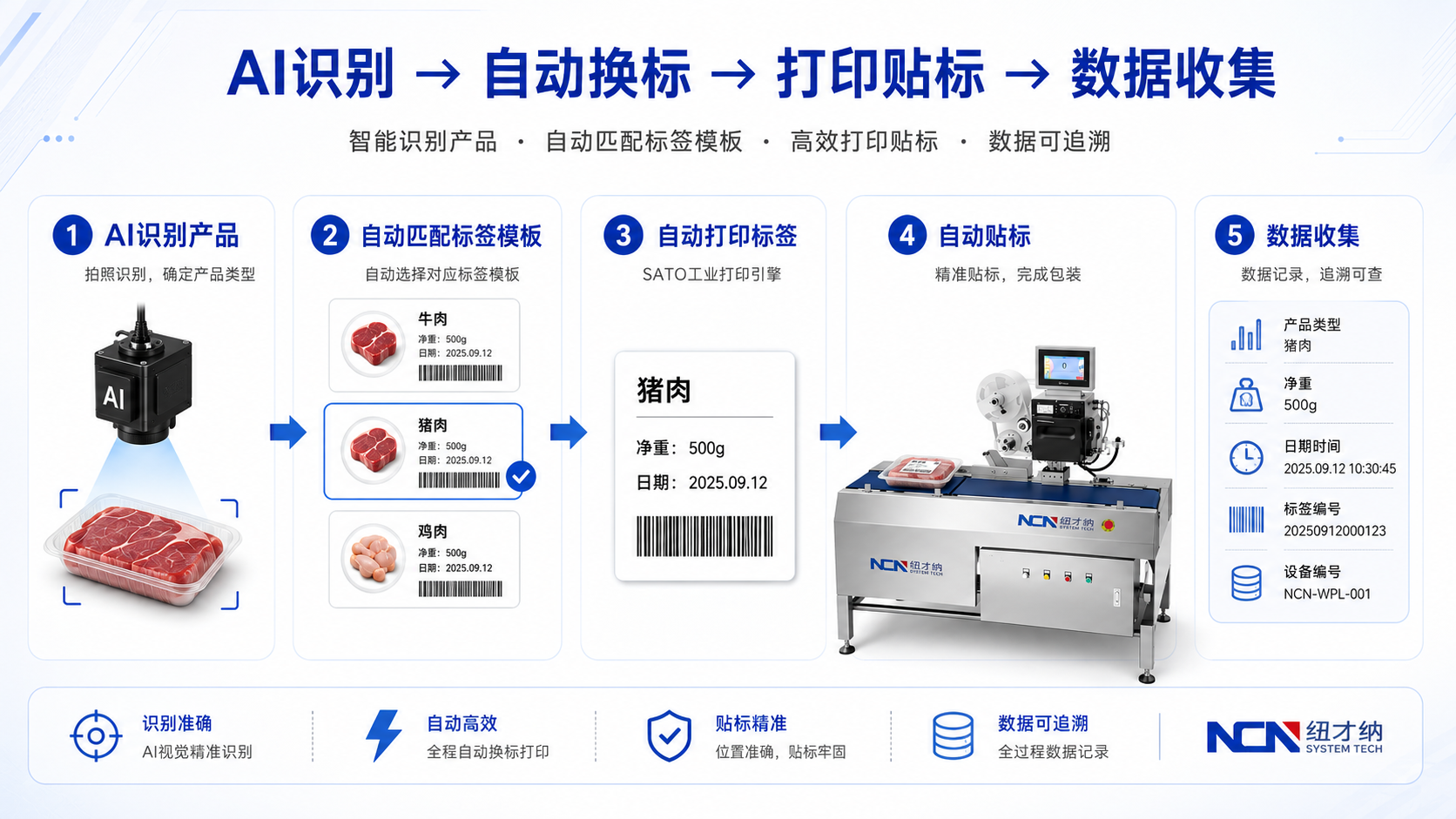
Recognition Is Only the Start: Using the Result to Control Equipment
After identifying a product, the system must map the result to product master data, label templates, weighing rules and exception handling. These relationships need to be defined for AI to drive the automation process beyond displaying a recognition result.
- Map each recognition result to a unique or clearly defined product category / SKU.
- Map each product category to the correct label template and variable fields.
- Use the dynamic weight in the label data for the current product.
- Define how to handle an unrecognised product, missing template or invalid data.
- Feed print-and-apply results into vision verification and data records where configured.
Define the Project Boundaries Early
AI Recognition and vision inspection performance cannot be promised independently of sample testing. Formal targets must specify the product range, inspection criteria and acceptance method.
Lessons for Similar Projects
Even successful recognition cannot automatically drive downstream operations unless the relationships between products, templates and exceptions have been defined.
When weight is variable data, product tracking, weighing results and label generation must remain correctly associated.
Recognition determines what the product is; post-application verification checks whether it has been labelled correctly. The two can share data but should not be confused.
Packaging, lighting, product orientation and line rate affect recognition and inspection. Validate performance using representative samples.
Define in advance what happens if a product cannot be recognised or weighed, a template is missing or vision inspection fails.
Recording product, weight, label and inspection results enables further traceability and production-management integration.
Related Products and Solutions
Start with Representative Samples and Operating Rules
Provide the products to recognise, label templates, weight range, target line rate and exception types so we can assess the combination of AI recognition, weigh-price labelling and vision verification.
 微信扫码咨询