
Intelligent Food Packaging End-of-Line Solutions Weighing · Inspection · Printing · Labelling · Traceability · System Integration
For operations after food packaging, combine inline weighing, AI vision, metal or X-ray inspection, print-and-apply labelling, automatic rejection and data systems into a continuous automated workflow from product inspection to label output and production-data recording.
Request a Line ProposalProduction-line problems require coordinated systems
When weighing, inspection, printing, labelling and data recording use separate machines, the main challenges often lie in equipment interfaces, decision logic and matching the data to each product.
Independently operating machines
Each machine may work correctly, while upstream and downstream operations lack shared control and coordinated status signals.
Difficulty matching product data
When weights, inspection results, labels and product records are disconnected, traceability and quality analysis become more difficult.
Remaining manual decisions
Even with automated equipment, product recognition, template selection and exception confirmation may still depend on operators.
Connect individual machines into an integrated end-of-line system
AI vision
Product recognition and quality inspection
Inline weighing
Dynamic weight measurement and evaluation
Foreign-body inspection
Metal detection or X-ray inspection
Print and apply
Real-time label generation and application
Automatic rejection
Separate nonconforming products automatically
Data systems
Records, interfaces and traceability
A typical end-of-line automation workflow
Product infeed
Enter the downstream line after packaging
Product recognition
Confirm the SKU and production order
Dynamic weighing
Capture product weight
Quality inspection
Vision or foreign-body inspection
Print and apply
Generate the corresponding label
Exception handling
Alarm or automatic rejection
Data recording
Create linked production records
How do end-of-line operations connect in actual production?
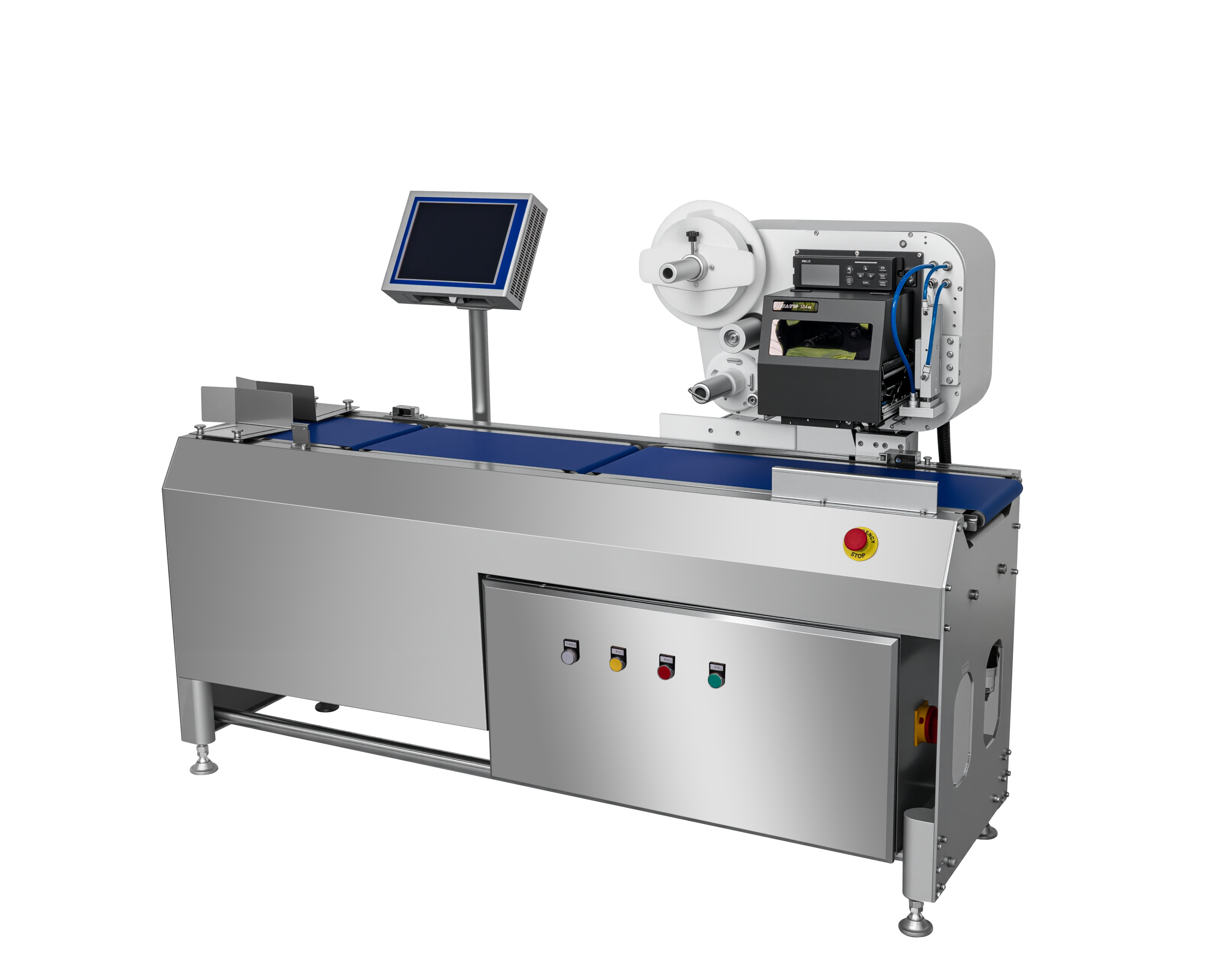
For food manufacturers, end-of-line automation provides value beyond individual machines: product conveying, information processing, printing, labelling and downstream inspection need to form a continuous workflow. The operating video below shows conveying, printing and label application on tray-packed products during continuous production.
The video shows the coordinated sequence of continuous conveying, label printing and automatic application. Product specifications, target rate, label size, application position and connections to adjacent operations must be confirmed against site conditions.
Connect control logic and data logic as well as equipment
System integration requires more than placing machines next to one another. The result at each station must determine the next machine action, while product identity, weight, inspection results and label information remain correctly matched.
- Use product recognition to select equipment recipes automatically
- Use weighing results in quality decisions
- Use vision results to trigger alarms and rejection
- Match label content automatically to the current product
- Coordinate operating states across machines
- Upload production data to MES, ERP or databases
Typical applications
Meat products
Weighing, inspection, labelling and traceability
Seafood
Product recognition and weigh-price labelling across multiple formats
Prepared foods
Multi-SKU packaging and label management
MAP trays / tray-packed foods
Post-packaging weighing, real-time print-and-apply and vision inspection
Cartons
Case-label print-and-apply and data traceability
Pack weights vary after MAP packaging. What comes next?
If labels need net content, price, date, batch, barcode or traceability information, product identification, dynamic weighing, real-time label generation and automatic application can follow packaging. Multi-SKU projects can use production-order data, scanning or AI recognition according to site conditions. For additional label verification, vision inspection and MES/ERP data integration can be added.
Explore Weigh-Price Labelling After MAP PackagingFrom automated equipment to an automated workflow
Reduce manual decisions
Let the system handle more recognition, weighing, inspection and template-selection tasks automatically.
Reduce gaps between operations
Shared control logic reduces coordination problems between machines.
Connect quality inspection to corrective actions
Failed inspection results can directly trigger alarms, rejection and data recording.
Create reliable source data
Link product, weight, inspection and label information to support downstream traceability.
Start with the workflow for a new line or an existing-line upgrade
Provide product details, required capacity, existing equipment, the factory layout and the operations to automate to begin assessing an integrated line proposal.
提交您的项目需求
告诉我们应用场景与节拍要求,我们会在 1 个工作日内提供选型建议与方案参考。
 微信扫码咨询