
AI Vision Inspection System Helping Machines Identify Products and Packaging
For product identification, classification and quality inspection on food packaging and automated production lines, industrial cameras, AI algorithms and machine controls are used to inspect products, packs, labels and production conditions.
Request a Vision Inspection Proposal View System Details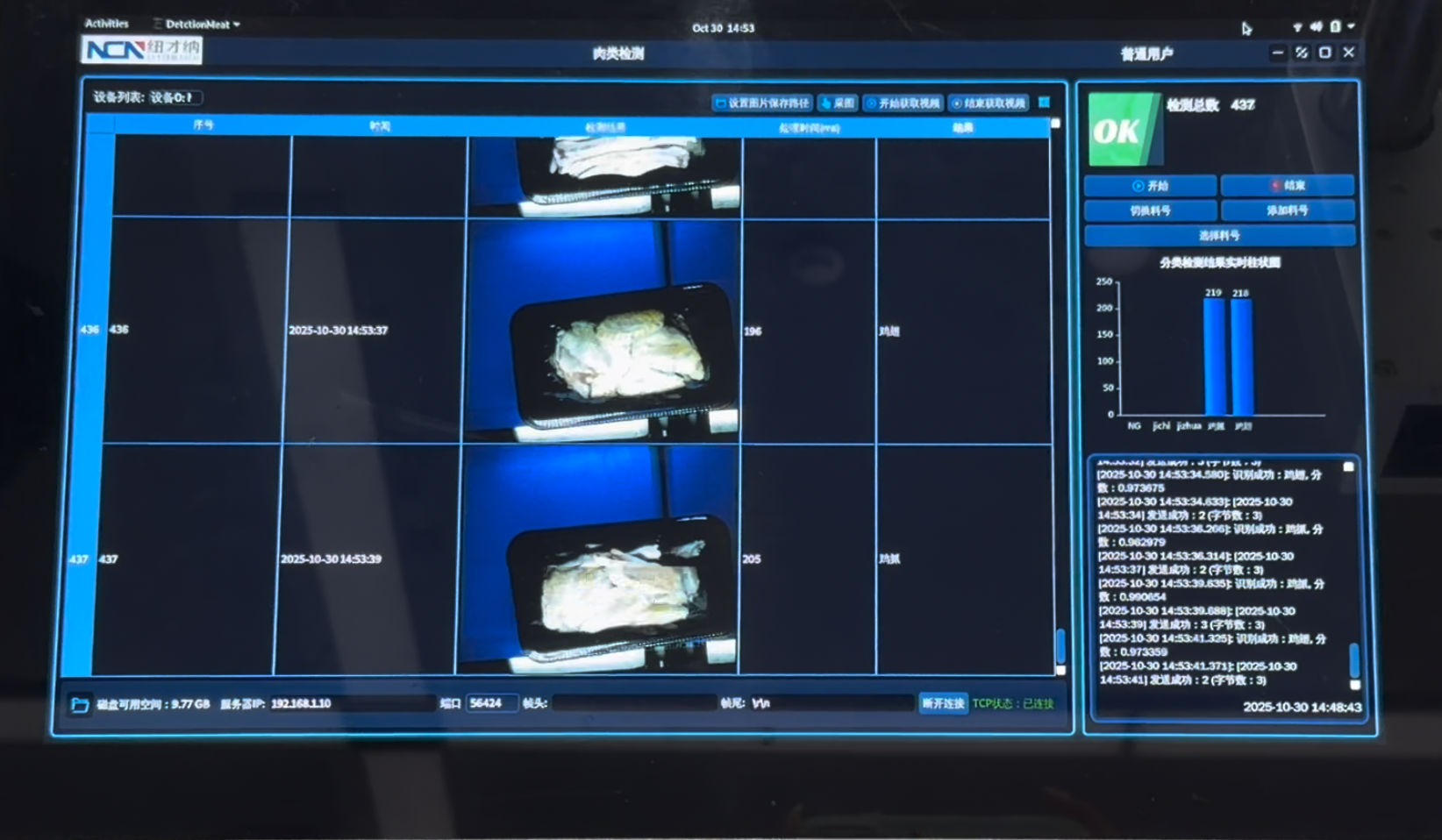
Move from Manual Checks to Automated Recognition and Data-Based Decisions
Many packaging-line quality decisions still depend on operators. As product varieties and line speeds increase, manual inspection can be affected by fatigue, experience and production conditions.
NCN’s AI Vision Inspection System captures product images using industrial cameras, then applies machine-vision algorithms and AI models to recognise, compare and assess them. Results can be sent to the PLC, rejection mechanism or supervisory system.
It can operate as a stand-alone inspection station or be integrated with weighing, print-and-apply labelling, metal detection, X-ray inspection and traceability systems.
Send Inspection RequirementsCore AI Vision Inspection Capabilities
Product Identification
Identify the product category using visual appearance, shape and packaging characteristics.
Label Inspection
Check label presence, position and the number of labels applied.
Packaging Inspection
Assess packaging conditions, appearance and defined regions of interest.
Result Integration
Send results to alarms, reject mechanisms, PLCs and production management systems.
What Can Be Inspected?
Actual inspection criteria depend on the product, packaging format, throughput and site conditions.
Product Category
Identify the product model, variety or packaging type as input for subsequent weighing, printing and labelling.
Label Presence
Confirm that a label has been applied and reduce the risk of unlabelled packs moving downstream.
Label Count
Verify the number of labels on packs that require multiple labels, detecting incomplete applications.
Label Position
Check whether labels are within the required application zone.
Packaging Condition
Identify and assess specified packaging characteristics, with inspection items defined through sample testing.
Custom Identification
Develop inspection logic for a specific production problem and validate it using actual samples.
Inspection Process
Product Infeed
Product arrives at the inspection station
Image Capture
Cameras capture the product image
AI Analysis
Algorithm-based recognition and comparison
Result Assessment
Output OK / NG result
Equipment Integration
Alarm, reject or record the result
An AI Vision System Is More Than a Camera
On a real production line, vision inspection often needs to work with machine controls, labelling equipment and production data systems.
- Conveyor and PLC integration
- Weighing system integration
- Print & apply labeller integration
- Automatic rejection integration
- Automatic inspection records
- Optional connection to MES or a database
Typical System Components
| Image Acquisition | Industrial cameras, lenses, lighting and mounting hardware, selected for the product and inspection area. |
|---|---|
| Inspection Algorithms | Conventional machine vision and AI recognition algorithms can be combined for the application. |
| Inspection Scope | Product identification, label presence, label counts, defined regions and other project-specific inspection items. |
| Inspection Throughput | Determined by product size, image count, algorithm complexity and production line speed. |
| Result Outputs | OK / NG signals, alarms, rejection, PLC integration and data records. |
| Data Connectivity | Optional links to PLCs, MES, databases or other production management systems. |
| Installation | Stand-alone inspection station or integration into existing conveyors and packaging machinery. |
| Project Validation | Testing with actual products, defect samples and site conditions is recommended. |
Note: AI vision inspection is an engineered, project-specific system. Detection accuracy, throughput and final configuration depend on product characteristics, sample quality, lighting conditions and inspection requirements. Performance must be verified with representative samples.
Typical Applications
Have an Inspection Challenge? Start with a Sample Assessment
Share product photos, OK/NG samples, line speed and inspection criteria so we can evaluate the appropriate vision approach.
提交您的项目需求
告诉我们应用场景与节拍要求,我们会在 1 个工作日内提供选型建议与方案参考。
 微信扫码咨询