
Metal Detection & X-ray Inspection SystemsFood Foreign-Object Inspection · Automatic Rejection · Production Data
NCN helps food manufacturers select metal detection or X-ray inspection according to the product, packaging material, target contaminants and throughput. Systems can be integrated with conveyors, rejection devices, online checkweighers, print-and-apply equipment and production data systems.
Submit Inspection RequirementsHow to Choose an Inspection Method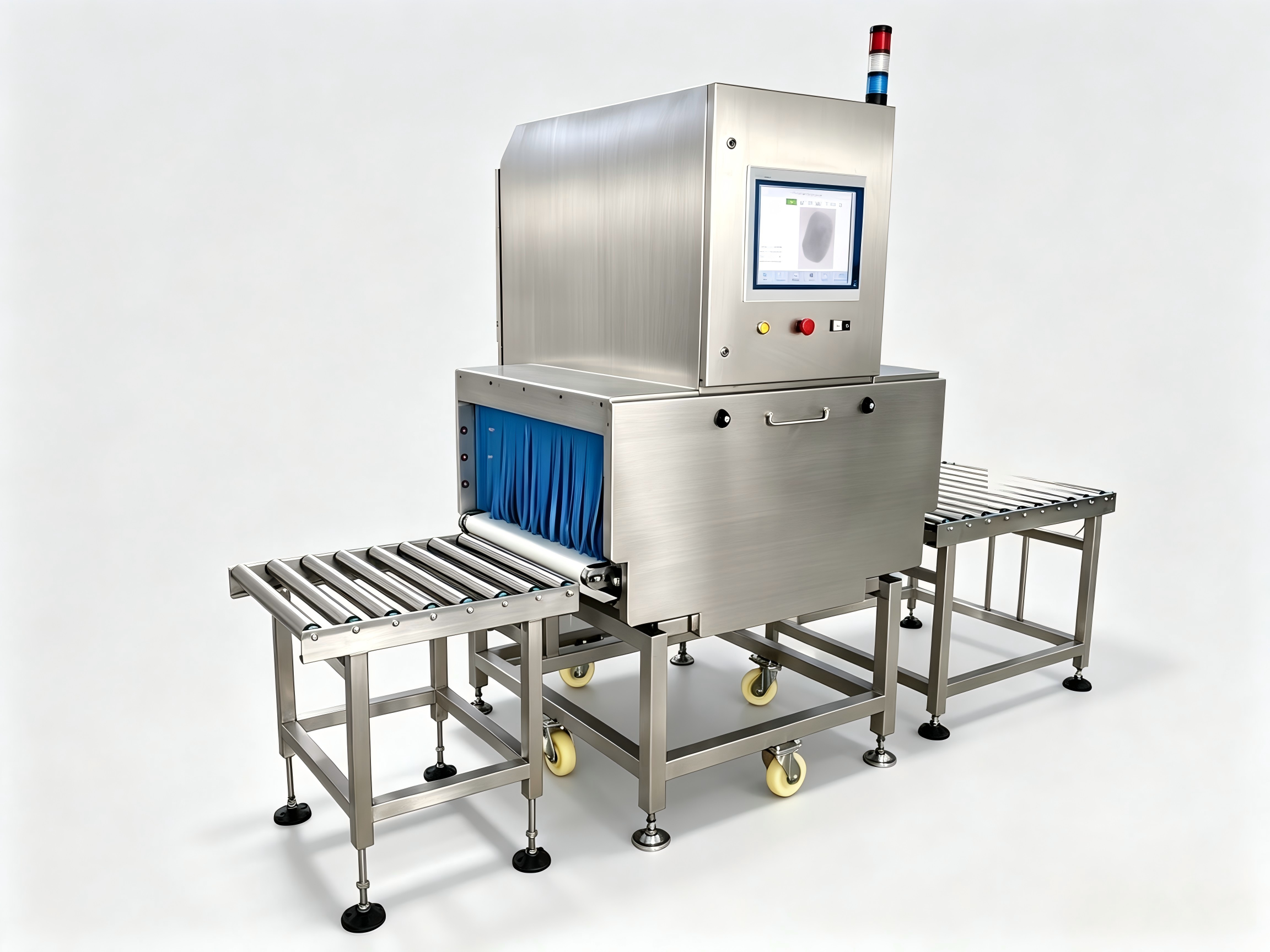
Inspection Equipment Forms Part of Production Quality Control
Metal detectors and X-ray systems both help manage foreign-object risks, but they use different detection principles and do not cover the same materials or packaging conditions.
Metal detectors are designed primarily for ferrous, non-ferrous and stainless-steel contaminants. X-ray inspection analyses differences in material absorption and may detect certain dense contaminants, including some metal, glass, stone and bone, depending on the product and test conditions.
Equipment selection requires more than a nominal sensitivity figure. Product effect, packaging materials, inspection aperture, conveyor speed, product spacing, rejection methods and interfaces with adjacent equipment all matter.
Discuss Product TestingAssess the Product and Pack Before Choosing Metal Detection or X-ray
These are not simply two levels of the same technology. The choice depends on target contaminants, product properties, pack materials and the operating process.
Metal Detection
Detects metal contaminants through changes in an electromagnetic field; widely used for in-line inspection on conventional food production lines.
- Principally detects ferrous, non-ferrous and stainless-steel metals.
- Suited to non-metallic packs and other formats that meet the detector’s operating requirements.
- Can be integrated with conveyors and rejection mechanisms.
- Performance must be confirmed by testing for product effect and aperture size.
X-ray Inspection
Uses differences in X-ray absorption to generate images and assess potential foreign objects, supporting more complex inspection requirements.
- May identify certain dense contaminants such as metal, glass, stone or bone under suitable product conditions.
- Can be considered for certain foil or metallised packaging applications.
- May also support selected missing-item, shape or count checks.
- Detection performance must be validated with actual samples.
| Comparison | Metal Detection | X-ray Inspection |
|---|---|---|
| Detection Principle | Electromagnetic field disturbance | X-ray absorption and image analysis |
| Primary Targets | Metal contaminants | Selected high-density contaminants |
| Packaging Considerations | Assess the packaging material’s effect on detection. | May be more suitable for some metallised packaging formats. |
| Product Considerations | Product effect can influence sensitivity. | Product density, thickness and structure affect detection. |
| Acceptance Testing | Actual product and certified test pieces | Actual product and representative contaminant samples |
From Foreign-Object Detection to Handling Nonconforming Products
Once installed on a line, inspection equipment must detect, assess and trigger alarms or rejection in sequence, without disrupting the intended production flow.
Continuous Inline Inspection
Products pass through the inspection area on a conveyor, reducing the need for individual manual checks.
Automatic Assessment
The system compares inspection results with configured acceptance criteria.
Rejection & Alarm
Pushers, air jets, flaps, swing arms, controlled stops or other linked actions can be selected for the project.
Inspection Data Recording
Store results, exceptions and product counts according to project requirements.
Typical Inline Inspection Process
Product Infeed
Stable conveying with suitable spacing
Foreign-Object Inspection
Pass through the inspection aperture
Result Assessment
System outputs an OK / NG result
Exception Handling
Alarm, stop the conveyor or reject automatically
Data Recording
Retain inspection and exception records
Applications Worth Evaluating
Consider risks such as metal or bone fragments and the effect of the product on inspection performance.
Select the method based on moisture content, temperature, packaging construction and line speed.
Multi-SKU products, mixed ingredients and changing packaging require both suitable detection performance and practical changeover.
Integrate with post-packaging conveying, checkweighing and automatic rejection.
Where the package interferes with conventional metal detection, evaluate an X-ray alternative.
Connect with online checkweighers, AI vision, print-and-apply equipment and production data systems.
Stand-Alone Inspection or an Integrated Packaging Line
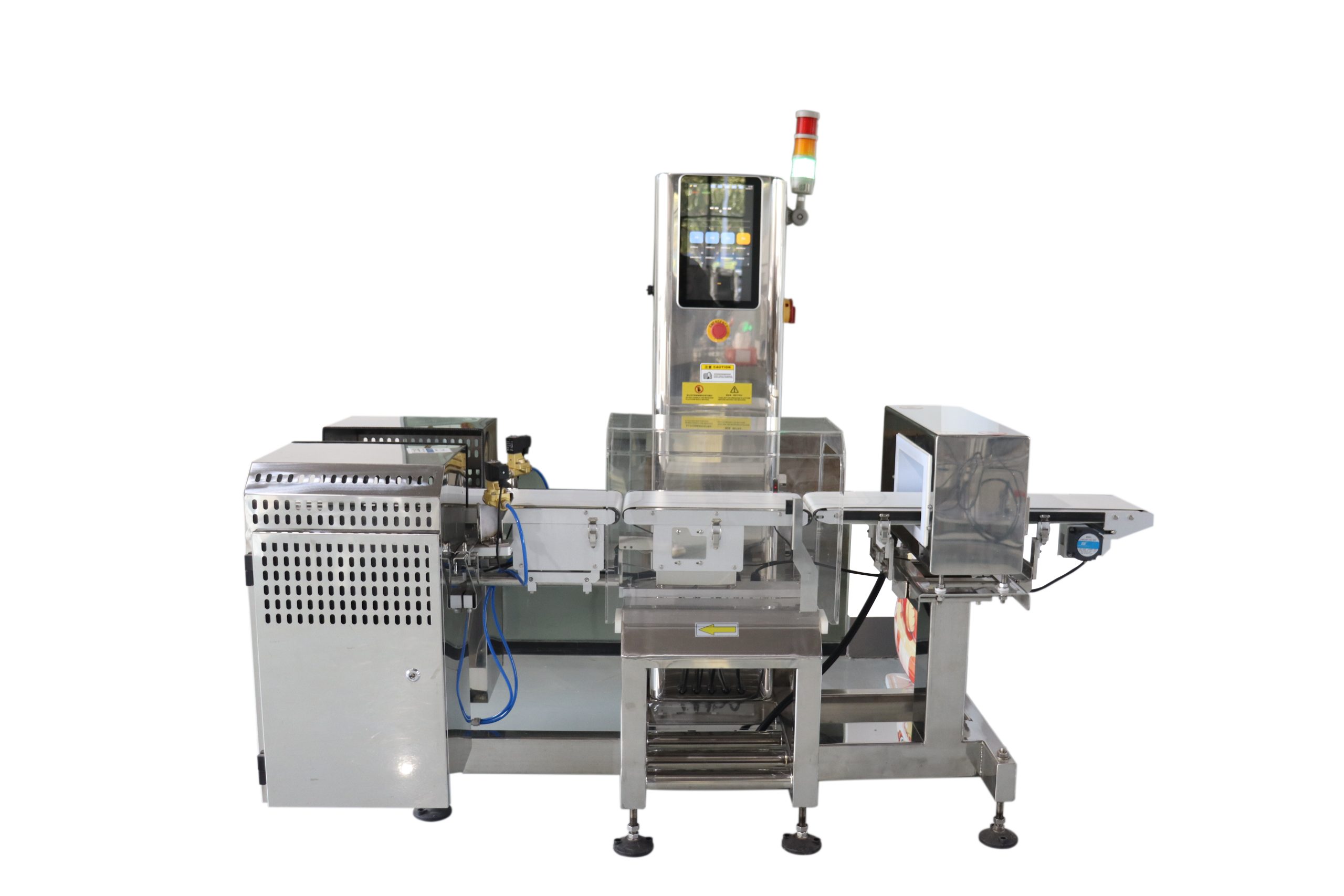
Depending on process position, inspection can be combined with weighing, AI vision, printing and labelling, rejection and production data integration.
- Upstream Conveying & Product Spacing
- Online Weighing & Weight Assessment
- Metal Detection or X-ray Inspection
- AI Vision for Product & Label Checks
- Print & Apply Labelling & Product Identification
- Rejection, Alarms & Result Recording
Prepare These Six Types of Information Before Equipment Selection
These details provide a more reliable basis for selection than asking for a single accuracy figure.
Product name, ingredients, condition and temperature.
Plastic bags, trays, paper cartons, foil or other materials.
Length, width, height and individual weight range.
Units per minute, product spacing and conveying method.
Contaminant types and representative sizes to detect.
Alarm, machine-stop, automatic rejection and data-retention requirements.
Frequently Asked Questions
Which Is Better: Metal Detection or X-ray Inspection?
Neither is universally better. Select according to contaminants, product properties, packaging, inspection aperture and throughput; test with real samples when necessary.
Why Can’t Inspection Sensitivity Be Judged from Machine Specifications Alone?
Product effect, packaging, size, inspection aperture and conveyor speed all influence actual detection performance.
Can X-ray Detect Every Type of Foreign Object?
No. X-ray inspection relies largely on density differences; detectability depends on contaminant density, size, position and the surrounding product thickness.
Can Inspection Equipment Be Integrated with a Weighing and Labelling Line?
Yes. Online checkweighing, inspection, print-and-apply labelling, AI vision and production data interfaces can be combined according to the project.
Use the Actual Product to Determine the Inspection Solution
Send product photos, packaging details, dimensions, throughput and the target contaminants. We can then assess metal detection versus X-ray inspection and arrange sample testing as appropriate.
提交您的项目需求
告诉我们应用场景与节拍要求,我们会在 1 个工作日内提供选型建议与方案参考。
 微信扫码咨询