
Sunner Development — Packaging End-of-Line Automation
NCN has worked with Fujian Sunner Development Co., Ltd. on downstream poultry packaging operations, including weighing, label printing and application, online checkweighing and equipment integration. Cooperation began on a single production line and later extended to other factories and applications following actual production use.
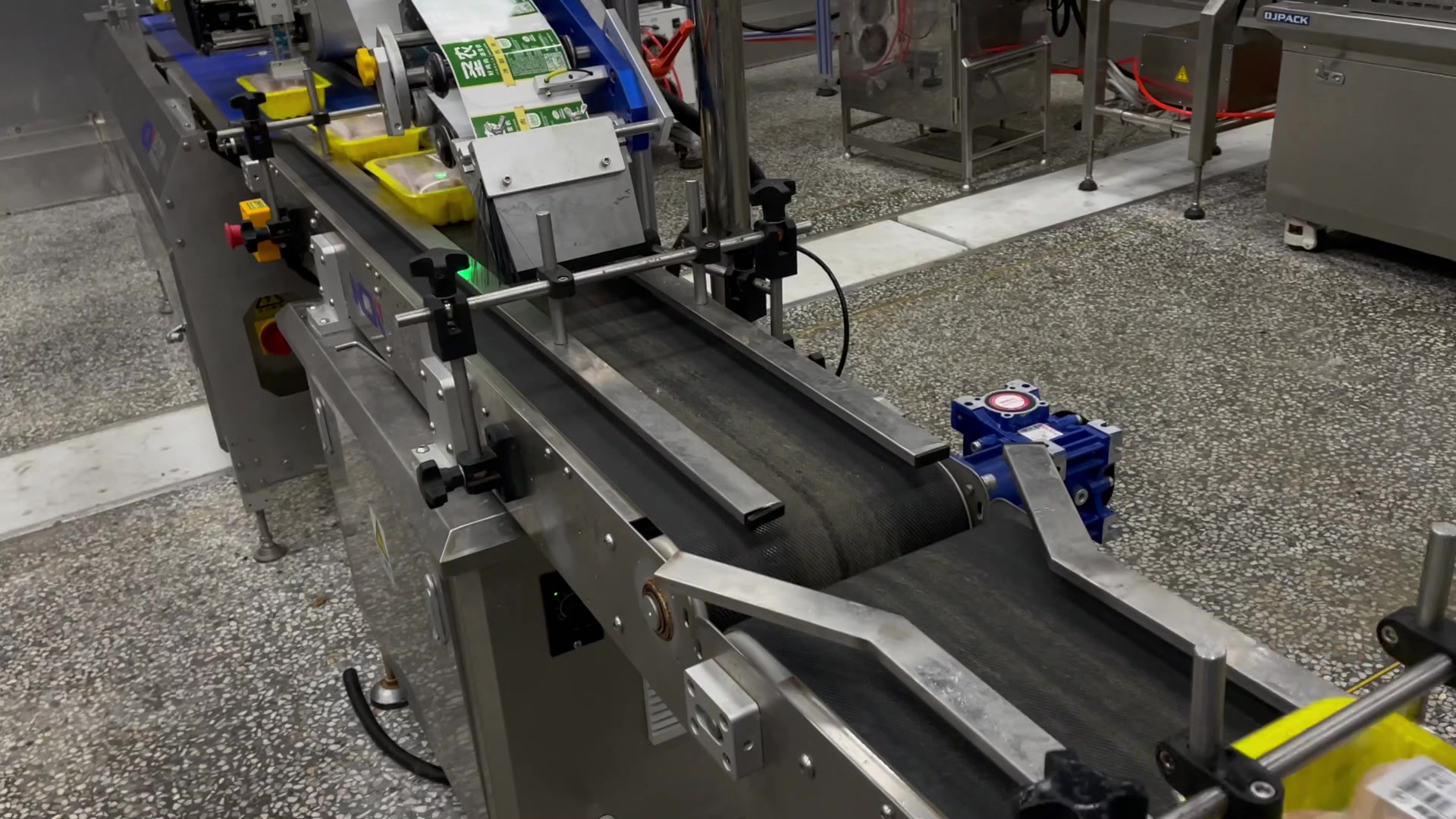
After Packaging, Downstream Operations Still Affect Throughput and Label Accuracy
Once poultry products are packed, they still need weight checks, label printing, automatic application and quality inspection. Individual weights naturally vary, while separate labels may carry product details, identification or traceability information. The practical challenge is to complete these operations continuously while reducing manual checks and mismatches between products and data.
Each Pack Has a Different Weight
Variable-weight poultry packs must be weighed individually in production rather than assigned a fixed nominal value.
Label Content Changes with the Product
Weight values, product data and labels for different purposes must remain matched to the pack moving along the line.
Several Operations Must Work in Sequence
Metal detection, weighing, printing and automatic labelling need to work consistently with upstream and downstream packaging machinery.
The Objective Was to Connect End-of-Line Operations, Not Simply Add Machines
After packaging, products move through an agreed sequence of inspection, weighing, label generation and application. End-of-line automation only delivers its intended value when machine actions and product data stay correctly linked.
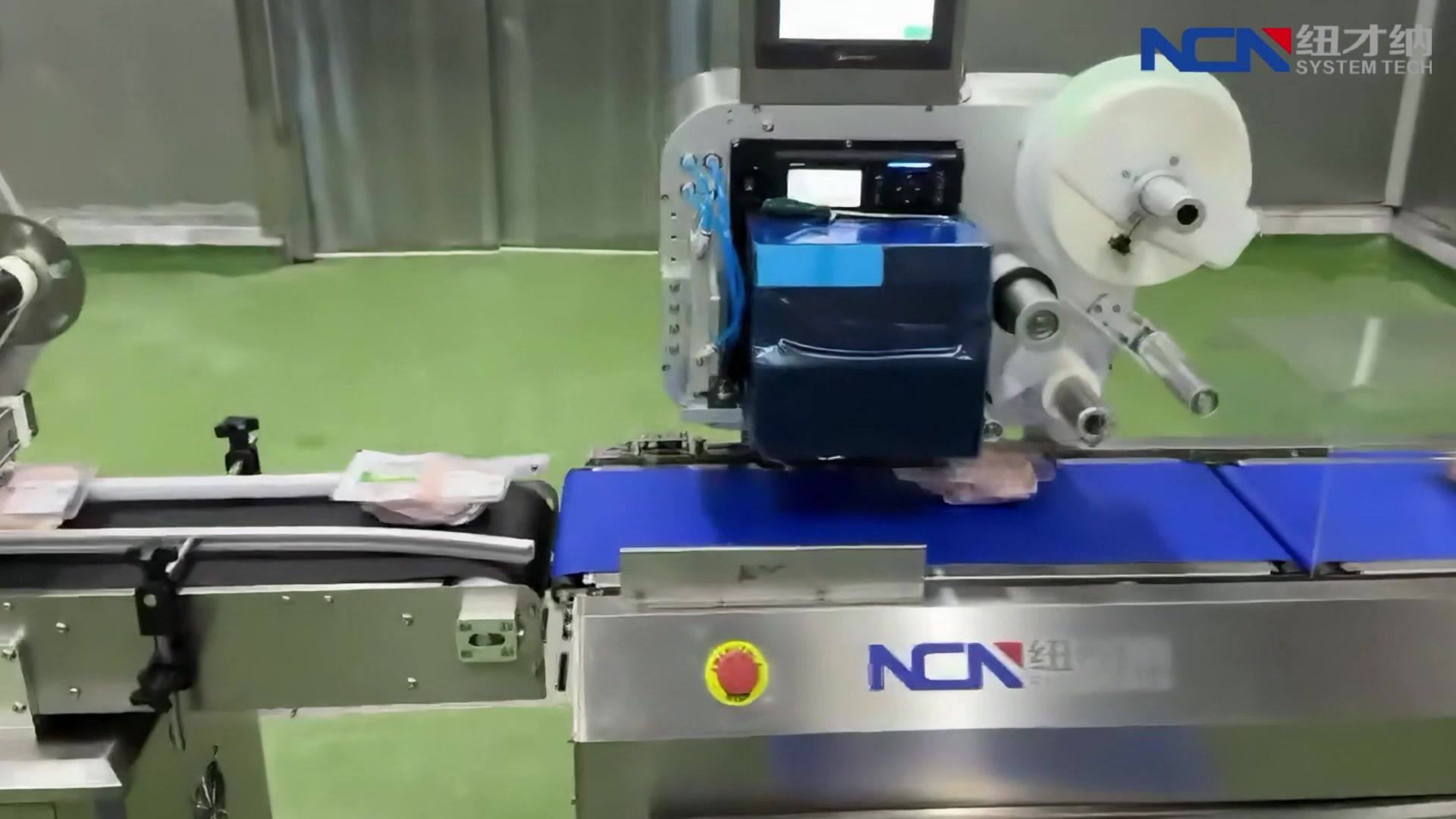
Generate the Correct Label Only After Weighing the Current Product
Individual poultry packs do not all weigh the same. Preprinting weight labels in batches would create additional work to match each label manually to its product.
An inline weighing and labelling system carries out these tasks in sequence. Once the pack has been weighed, the system generates label data for its measured weight, then prints and applies the corresponding label.
- Product Enters the Weighing Station
- Capture the Actual Product Weight
- Generate the Matching Label Data
- Print and Apply Automatically
One Product May Require Several Labels
Besides the weight label, packaging may require product-identification and traceability labels.
Additional automatic labelling stations can be installed downstream of the weigh-price labeller so that different label applications take place on the same line.
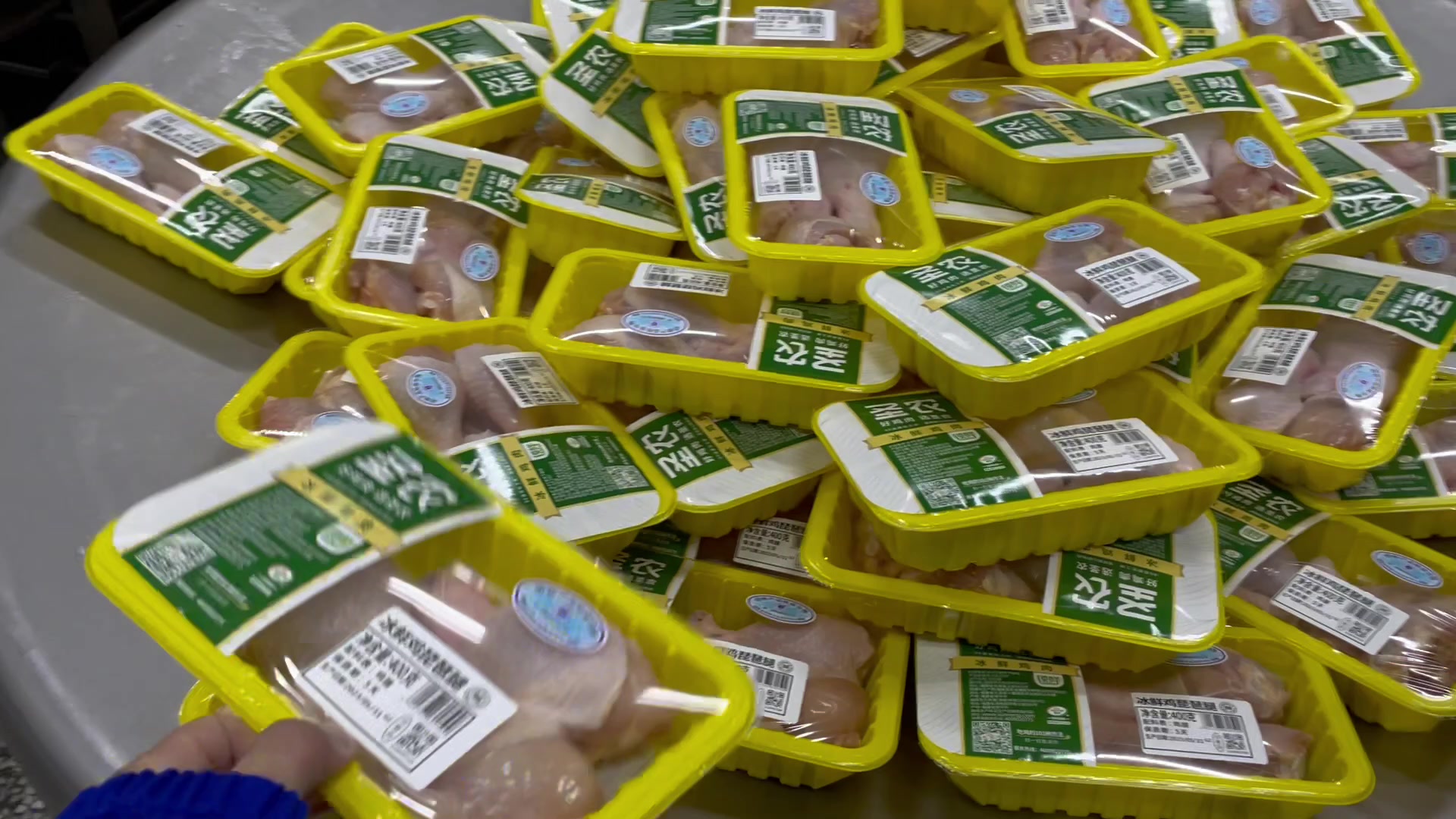
Repeat Adoption After Production Use Matters More Than a One-Off Purchase
Cooperation continued after the first installation entered production. Sunner subsequently used additional NCN checkweighing and related end-of-line equipment at different factories and for new production requirements. The significance is not the equipment count alone, but the ability to apply a proven engineering approach to further production settings.
Starting with an End-of-Line Packaging Project
Weighing and labelling, multi-station automatic application and conveyor integration were put into production.
Extending Cooperation Across Factories
Checkweighing and associated end-of-line equipment were introduced for additional production applications.
Further Development
New requirements continue to involve higher-throughput end-of-line operations, multi-station labelling and production-data integration.
What Did the Production Process Gain?
Generate the label from the measured pack weight rather than manually weighing, finding and verifying separate labels.
Keep the product, its actual weight and the corresponding label data linked within one production process.
Connect inspection, weighing, printing, application and conveying to reduce intermediate handling and waiting.
The architecture can be extended to vision inspection, production-data records and MES/ERP connections as required.
What Can Similar Production Lines Learn from This Case?
Define the Relationship Between Each Product, Its Weight, Its Labels and the Sequence of Operations
For variable-weight foods, multi-label packs and continuous packaging lines, the key issue is usually not the specifications of one machine. It is how the correct label is generated from each measured weight and how labelling, inspection and conveying remain coordinated afterward.
- Minimum and Maximum Product Weights and Packaging Formats
- Number of Labels, Content and Application Positions
- Target Throughput and Upstream/Downstream Equipment Interfaces
- Requirements for Checkweighing, Vision Verification or Data Integration
Related Equipment & Solutions
Does Your Line Handle Variable Weights, Several Labels or Multiple Linked End-of-Line Processes?
Start with real product samples, label requirements, target throughput and the site layout. These determine how weighing, printing, application, inspection and data interfaces should be combined.
 微信扫码咨询